Easy Bulgogi
This is my mom’s bulgogi recipe! She usually cooks entirely by taste and instinct, so what you’re seeing here is one of the rare cases she actually wrote something down. Bulgogi is one of the most well known Korean dishes there is. The word literally means “fire meat” (bul (불) meaning fire and gogi (고기) meaning meat) and it’s thinly sliced beef marinated in a sweet, savory, deeply fragrant sauce and cooked quickly over high heat. The result is incredibly tender beef with caramelized edges, a flavor that’s simultaneously sweet and salty and nutty from the sesame oil, with this underlying savory depth from the soy sauce and garlic that makes it completely addictive.
Why You’ll Love This Recipe
- My mom’s recipe — which automatically makes it the best version
- That marinade — soy sauce, sesame oil, and grated onion create something sweet, savory, and deeply fragrant that soaks into the beef completely
- Quick to cook — once the beef has marinated it comes together in minutes
- Versatile — eat it with rice, wrap it in lettuce leaves, add it to fried rice the next day
My Latest Videos
Bulgogi: Recipe That’s Been a Hit Since Elementary School
Bulgogi is comfort food in the truest sense. The kind of dish that shows up at family dinners, gets packed into lunchboxes, and is the first thing I think about when I’m craving something Korean and homey. The flavor profile is distinctly Korean in the best way: sweet from the syrup and sugar, savory and salty from the soy sauce, nutty and fragrant from the sesame oil, with a subtle warmth from the black pepper and a natural sweetness from the grated onion that also tenderizes the meat. This is the same recipe my mom has been making since I was in elementary school. She would make it for cultural potlucks at school and it was always the dish that disappeared first. I remember being so proud bringing it and watching my classmates go back for more. It’s one of those memories that’s completely tied to the smell and taste of this specific marinade, and every time I make it now it takes me right back.
Bulgogi Ingredients
BULGOGI
- 1 kg (about 2.2 lbs) thinly sliced beef for bulgogi
- 1 onion, thinly sliced
- ½ carrot, thinly sliced or julienned
- Green onion, cut into pieces
- Shiitake mushrooms, sliced (king oyster or enoki also work great)
MARINADE
- 100-150 ml (about 7-10 tbsp) soy sauce
- 50 ml (about 3½ tbsp) oligo syrup, corn syrup, or mulyeot (Korean rice syrup)
- 2 tbsp brown sugar
- 3 tbsp garlic, minced
- 3 tbsp mirin
- 3-4 tbsp sesame oil
- Black pepper, to taste
- ½ to 1 whole onion, grated or blended
The Beef
Look for beef that’s already thinly sliced and labeled for bulgogi at a Korean grocery store. It’s usually ribeye or sirloin cut thin enough that it cooks almost instantly. If you’re slicing your own, partially freeze the beef first and slice as thinly as you can against the grain. Before marinating, pat the beef dry with a kitchen towel to remove any blood. This helps the marinade absorb better and keeps things from getting watery when you cook.
The Marinade
The base of this marinade is soy sauce and oligo syrup. Oligo syrup is a Korean sweetener that’s less sweet than sugar and gives bulgogi that characteristic glossy coating. If you can’t find it corn syrup or mulyeot (Korean rice syrup) both work. The grated onion is doing double duty here. It sweetens the marinade and also contains enzymes that tenderize the meat, so don’t skip it. My mom’s tip that I think about every time I make this: season the marinade a little stronger than you think you need to. Once you add the vegetables and cook everything together it dilutes slightly, so you want to start with something that tastes almost too savory on its own.
The Vegetables — My Mom’s Way vs the Easy Way
My mom slices all her vegetables separately and adds them when she’s cooking and serving rather than mixing them into the marinade with the meat. The vegetables stay fresh and don’t get soggy sitting in the soy sauce, and you get more control over how much you add to each serving. This is the way I’d recommend if you have the time.
That said, if you want to keep things simple, just mix the vegetables in with the meat and marinade from the start. It all cooks together and still tastes great. Both methods work, it’s just a matter of preference and how much effort you want to put in on a weeknight.
How To Make Bulgogi
- Prep the beef: Pat the bulgogi beef dry with a kitchen towel to remove any blood. Set aside.
- Make the marinade: In a bowl combine soy sauce, oligo syrup, sugar, minced garlic, mirin, sesame oil, a generous amount of black pepper, and grated or blended onion. Mix well. Taste it — it should taste strong and savory. If it seems bland add a little more soy sauce.
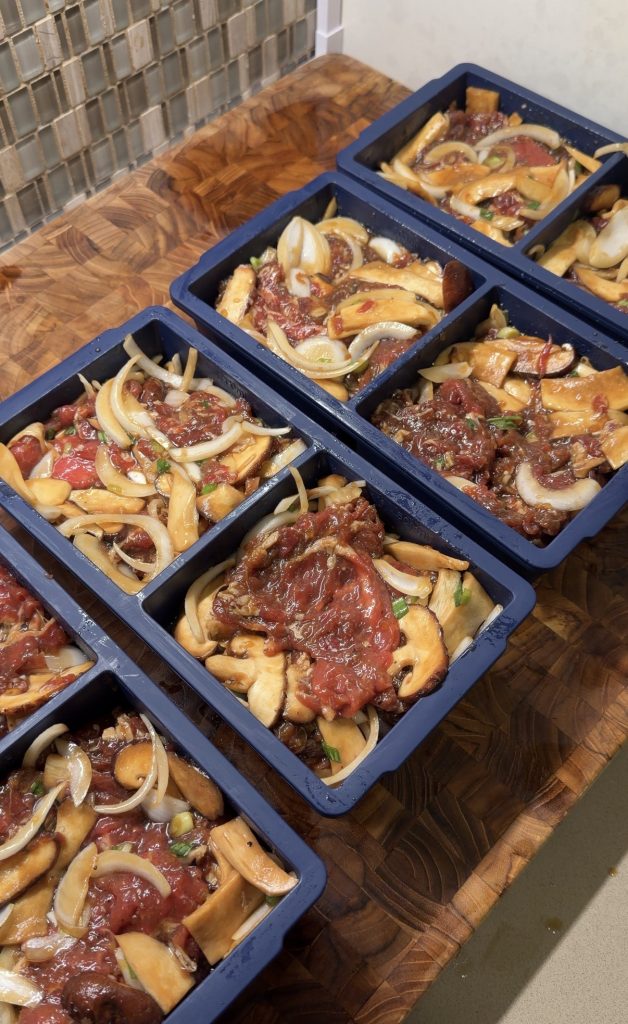
- Marinate: Add the beef to the marinade and massage everything together until every piece is well coated. Cover and marinate in the fridge for at least 30 minutes. A few hours is better, overnight is best.
- Prep the vegetables: Thinly slice the onion, carrot, shiitake mushrooms, and green onion. Set aside separately if you’re doing it my mom’s way, or mix into the beef if you’re going the convenient route.
- Cook: Heat a pan or grill pan over medium-high heat. If you’re keeping the vegetables separate cook the beef first in batches. Don’t crowd the pan or it’ll steam instead of sear. Once the beef is almost cooked through add the vegetables and cook together until everything is done. If you mixed the vegetables in with the marinade just cook everything together from the start.
- Serve: Serve immediately over steamed white rice, with lettuce wraps and banchan on the side, or however you like it.
Storage & Reheating
Storage: Store cooked bulgogi in an airtight container in the fridge for up to 3 days.
Reheating: Reheat in a pan over medium heat until warmed through. A quick toss in a hot pan keeps it from drying out better than the microwave does, though the microwave works in a pinch.
Marinated uncooked beef: You can keep it marinating in the fridge for up to 2 days before cooking. The flavor gets better the longer it sits.
Freezing: The marinated uncooked beef freezes really well. Portion it out into individual servings before freezing so you can pull out exactly what you need. Freeze in airtight bags or containers for up to 3 months. When you’re ready to cook just thaw in the fridge overnight and cook as normal, or cook straight from frozen in a pan over medium heat. It’ll release some liquid as it thaws in the pan but just let it cook off and the bulgogi will still be great.
Bulgogi (불고기)
Ingredients
Bulgogi
- 2.2 lb thinly sliced beef for bulgogi
- 1 thinly sliced
- 1/2 carrot thinly sliced or julienned
- green onions cut into pieces
- shiitake mushrooms sliced
Marinade
- 100 ml soy sauce adjust to taste
- 3 tbsp oligo syrup/ corn syrup/ or mulyeot can replace with more sugar, adjust to taste
- 2 tbsp brown sugar
- 3 tbsp garlic minced
- 3 tbsp mirin
- 3 tbsp sesame oil
- black pepper to taste
- 1/2 onion grated/blended
Instructions
- Prep the beef: Pat the bulgogi beef dry with a kitchen towel to remove any blood. Set aside.
- Make the marinade: In a bowl combine soy sauce, oligo syrup, sugar, minced garlic, mirin, sesame oil, a generous amount of black pepper, and grated or blended onion. Mix well. Taste it — it should taste strong and savory. If it seems bland add a little more soy sauce.
- Marinate: Add the beef to the marinade and massage everything together until every piece is well coated. Cover and marinate in the fridge for at least 30 minutes — a few hours is better, overnight is best.
- Prep the vegetables: Thinly slice the onion, carrot, shiitake mushrooms, and green onion. Set aside separately if you're doing it my mom's way, or mix into the beef if you're going the convenient route.
- Cook: Heat a pan or grill pan over medium-high heat. If you're keeping the vegetables separate cook the beef first in batches — don't crowd the pan or it'll steam instead of sear. Once the beef is almost cooked through add the vegetables and cook together until everything is done. If you mixed the vegetables in with the marinade just cook everything together from the start.
- Serve: Serve immediately over steamed white rice, with lettuce wraps and banchan on the side, or however you like it.