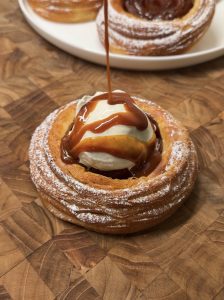
Apple Rose Tarte Tatin Danish
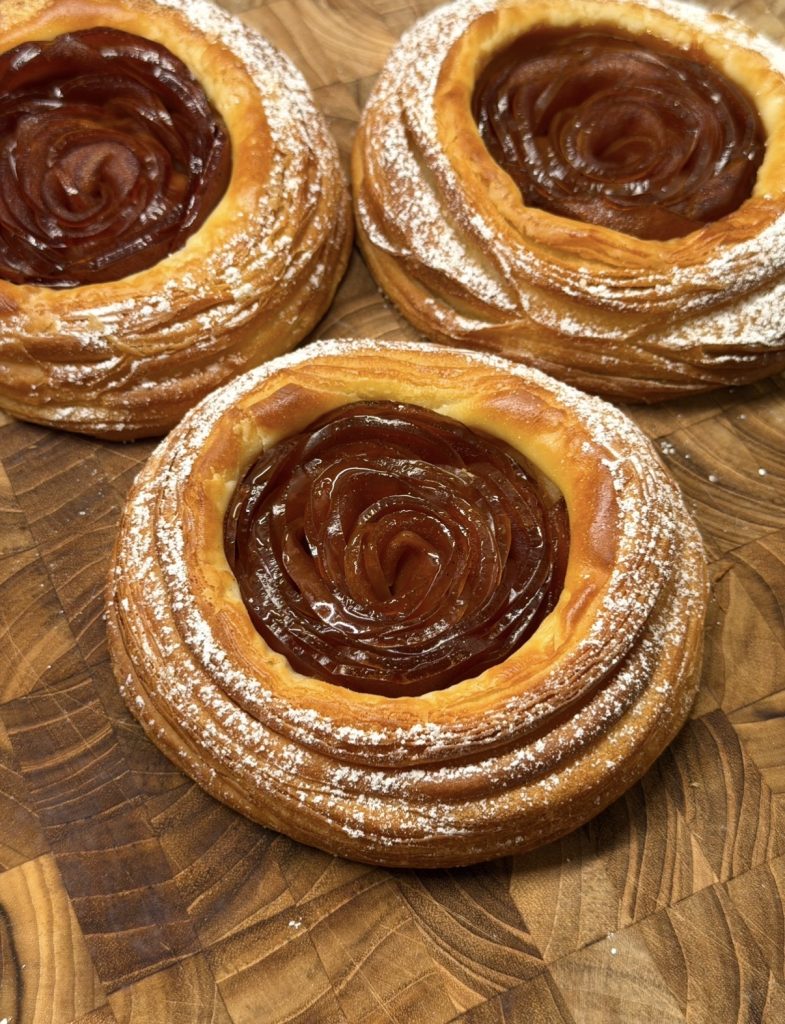
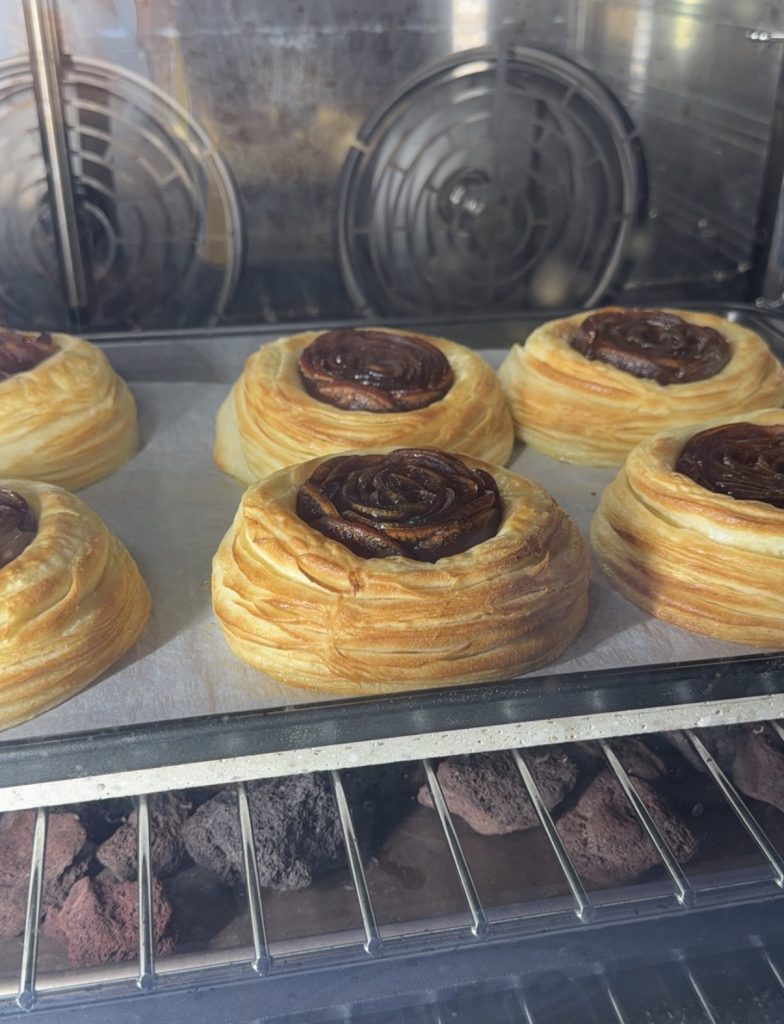
This one started with my first ever viral TikTok, apple roses made with puff pastry. Ever since then I’ve wanted to make an elevated version that felt more like a proper pastry and less like a shortcut. This version is with a full laminated croissant dough danish topped with a caramelized apple rose tarte tatin, thin apple slices formed into roses, set with a vanilla bean caramel, baked until the caramel has soaked through every layer, and then placed into a proofed laminated danish and baked until golden. It takes time and there are several components but none of it is technically beyond a home baker. It’s perfect for fall and for when you want to show up somewhere with a dessert that’s a little more elevated!
Why You’ll Love This Recipe
- The original apple rose elevated — everything that made my viral puff pastry apple roses work, taken to a proper laminated danish level
- Vanilla bean caramel tarte tatin filling — the caramel soaks into every layer of the apple rose as it bakes and the flavor is incredible
- Laminated croissant dough — flaky, buttery, and the perfect vessel for the caramel apple rose
- A showstopper that’s actually doable — it takes time and planning but the steps themselves are manageable for a patient home baker
- Perfect for fall entertaining — bring these to a potluck or dinner party!
My Latest Videos
Apple Tarte Tatin Danish: My Viral Apple Rose, All Grown Up
My very first viral TikTok was apple roses made with puff pastry. It was simple, it was pretty, and apparently a lot of people loved it. But ever since it blew up I’ve wanted to revisit the concept with a proper laminated dough and a real tarte tatin-style filling instead of plain puff pastry. The apple roses are formed from thinly softened apple slices rolled into a tight bud shape, set in a mold face down so the curved petals are on top when you flip them, and baked with a vanilla bean caramel pooled underneath that soaks up into every layer as it bakes. Then that whole caramel apple rose unit gets pressed into the center of a proofed laminated danish and baked until golden.
Apple Tarte Tatin Danish Ingredients
DANISH DOUGH (DÉTREMPE)
- 500 g bread flour
- 125 g T65 flour
- 307 g iced water, temperature calculated for 75°F final dough temp
- 70 g sugar
- 30 g milk powder
- 57 g unsalted butter, cold and cut into small cubes
- 8 g instant yeast
- 13 g salt
LAMINATION BUTTER
- 310 g unsalted butter, for butter block
EGG WASH
- 1 egg
- 1 egg yolk
- 60 g milk
APPLE ROSES
- 6-7 apples, cored and thinly sliced
- Silicone mold, 6 cavities — you need 2 of these, this pack comes with 2
VANILLA BEAN CARAMEL
- 160 g granulated sugar
- 1 vanilla bean pod, seeds scraped
- 85 g unsalted butter, cut into small cubes
- Pinch of salt
FOR SERVING
- Powdered sugar, for dusting
- Vanilla ice cream
- Extra caramel
The Danish Dough
I use my croissant dough recipe as the base for this danish (a full croissant post is coming soon, I’m still tweaking the recipe and want to get it exactly right before publishing)! The dough is a standard laminated pastry détrempe, bread flour and T65 for flavor and structure, milk powder for richness and color, and a small amount of butter worked into the dough itself before lamination. The key is keeping everything cold throughout the entire process and hitting your target final dough temperature of 75°F after kneading. I use mostly ice to calculate my water temperature — the same principle I cover in my Salt Bread post applies here too.
The Butter Block
The lamination butter is what creates all those flaky golden layers. You’re looking for the butter to be pliable and smooth, not cold and brittle, not soft and greasy. I target around 51°F for the butter and 39°F for the dough when I lock in. If the butter is too cold it will crack and shatter between the dough layers instead of creating clean even lamination. Press gently with your finger, it should indent smoothly without cracking. The texture should feel similar to the dough itself.
Lamination — The Letter Fold
For this danish I do 3 letter folds total. A letter fold works exactly like folding a piece of paper to fit in an envelope. Fold the bottom third of the dough up, then fold the top third down over it, so you end up with three layers stacked on top of each other. Each fold multiplies your layers and each rest in the fridge between folds allows you to control the dough temp and for the gluten to relax so the dough doesn’t spring back when you roll it. Cutting the folded edges with a knife before each subsequent roll releases tension and helps you roll more evenly. Always keep the cut edges on the sides as you roll, never the leading edges.
The Apple Roses
Thinly sliced apples get softened in water in the microwave until they’re pliable enough to bend without snapping (around 3-5 minutes) then drained and patted completely dry. You overlap the slices curved edge up and roll them up into a tight bud shape, building the rose out from the center, adding more slices around the edges until you reach your desired size. The roses get placed face down into the silicone mold — curved petal edges facing down — so when you eventually flip and unmold them the petals are on top. Freezing them in the mold while you make the caramel helps them hold their shape.
How To Make Apple Tarte Tatin Danish
NIGHT BEFORE — MAKE THE DÉTREMPE
- Mix the dough: In a stand mixer with a dough hook combine bread flour, T65 flour, sugar, milk powder, salt, cold butter cubes, iced water, and instant yeast. Knead on low until everything comes together then increase to medium and knead until the dough is smooth and forms a thin windowpane. Target final dough temperature is 75°F — use mostly ice water to hit this.
- First rest: Shape into a smooth ball, cover, and rest for 20 minutes.
- Rough fold: Degas the dough and form into a rough rectangle. Do one rough letter fold — fold the bottom third up and the top third down — just to get it into a manageable rectangular shape. Cover and rest another 20 minutes.
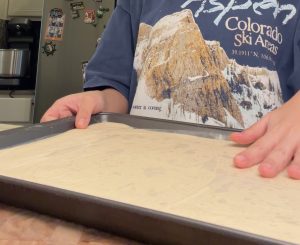
- Roll and freeze: Lightly flour a 17×11 inch sheet pan. Roll the dough out evenly to fill the entire pan. Cover tightly and place in the freezer for 30 minutes then transfer to the fridge overnight. If using same day freeze for around 2 hours then transfer to fridge — it will be ready to use at that point.
- Make the butter block: Fold parchment paper or guitar sheets into an 8.5×11 inch rectangle. Temper the butter with a rolling pin, beating and rolling it until pliable and smooth. Roll evenly to fill the dimensions. Refrigerate overnight.
NEXT DAY — MAKE THE APPLE ROSES
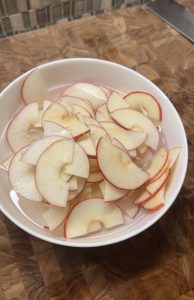
- Soften the apples: Place thinly sliced apples in a bowl of water and microwave for 3-5 minutes until the slices bend easily without snapping. Drain and pat completely dry with paper towels.
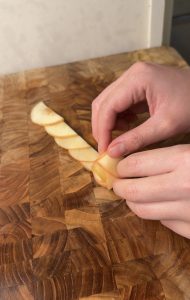
- Form the roses: Overlap the apple slices in a line about 10 inches long with curved edges facing up. Roll up tightly from one end to form the base of the rose. Once you have a foundation shape add more apple slices around the outer edges to build the rose to your desired size — aim to fit your 6-cavity silicone mold.
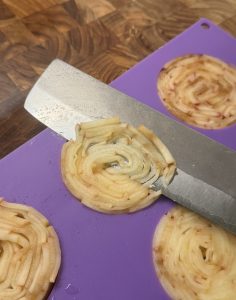
- Set in mold: Place each rose face down into the mold cavities so the curved petal edges face downward. Using a knife trim the bottom of each rose flush with the top of the mold to remove excess. Place the mold in the freezer while you make the caramel.
MAKE THE CARAMEL
- Infuse the sugar: Scrape the seeds from the vanilla bean pod and rub them into the sugar with your fingers until evenly distributed.
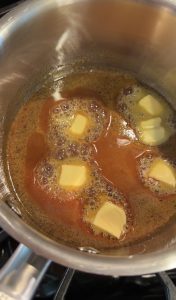
- Make the caramel: Add the vanilla sugar to a small saucepan over medium heat. Heat without stirring too often until the sugar melts and turns a deep amber color at around 330°F. Remove the pan from the heat and add the cold butter cubes — it will bubble vigorously, stir until fully combined. Add a pinch of salt.
- Pour into mold: Working quickly pour approximately 25 g of caramel into each cavity of your second silicone mold. The caramel sets fast so move quickly. Alternatively pour the caramel onto a nonstick or silicone mat, let cool until just barely pliable, then cut into 25 g portions with a knife and press into the mold cavities — this is actually easier if the caramel has already hardened.
- Melt caramel if needed: Preheat oven to 350°F. If your caramel has hardened in the mold place the mold on a sheet pan and put in the oven just until the caramel is evenly melted across the bottom of each cavity.
BAKE THE APPLE ROSES
- Assemble and bake: Remove the apple roses from the freezer and place them face down into the mold cavities with the melted caramel. Bake at 350°F for 40-50 minutes until the caramel has saturated all the layers of the apple rose and is deeply golden. Remove from oven, let cool slightly, then place the mold in the freezer to set while you laminate.
LAMINATE THE DOUGH
- Temper the butter block: Remove the butter block from the fridge and let it sit at room temperature for around 10 minutes depending on your kitchen temperature. The butter should feel pliable and smooth — press gently with your finger and it should indent without cracking. Target around 51°F for the butter and 39°F for the dough.
- Lock in the butter: Lightly flour your work surface. Remove the dough from the sheet pan — it should already be the right dimensions. Place the butter block in the center of the dough. Cut and fold the dough edges over the butter to fully enclose it, closing the center seam. Press along the surface lightly with a rolling pin to soften and adhere the butter to the dough, flipping and pressing both sides.
- First letter fold: Roll the dough out to approximately 24 inches long at 8 mm thickness applying light even pressure throughout — uneven pressure creates uneven lamination. Perform a letter fold — fold the bottom third up, then fold the top third down over it so you have 3 layers stacked. Cover and refrigerate 15 minutes.
- Second and third letter folds: Remove from fridge and use a knife to cut along the two folded edges to release tension — these cut edges always go on the sides as you roll, never at the leading edges. Roll out again to the same dimensions and perform another letter fold. Refrigerate 15 minutes. Repeat one more time for a total of 3 letter folds.
- Final roll: Roll out to approximately 8-10 mm thickness in a 12×8 inch rectangle. If the dough feels soft refrigerate another 15 minutes before cutting.
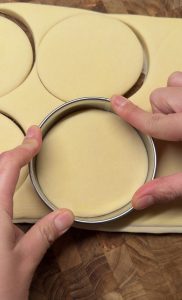
- Cut the danish: Use a 10 cm circular cutter to punch out 6 circles from the dough, or cut 4×4 inch squares if you prefer cleaner edges or don’t have a circular cutter.
- Final proof: Place cut dough on a parchment-lined tray. Lightly cover with plastic wrap and let final proof until noticeably puffy and the lamination layers start to visibly separate — about 2-3 hours at room temperature.
ASSEMBLE AND BAKE
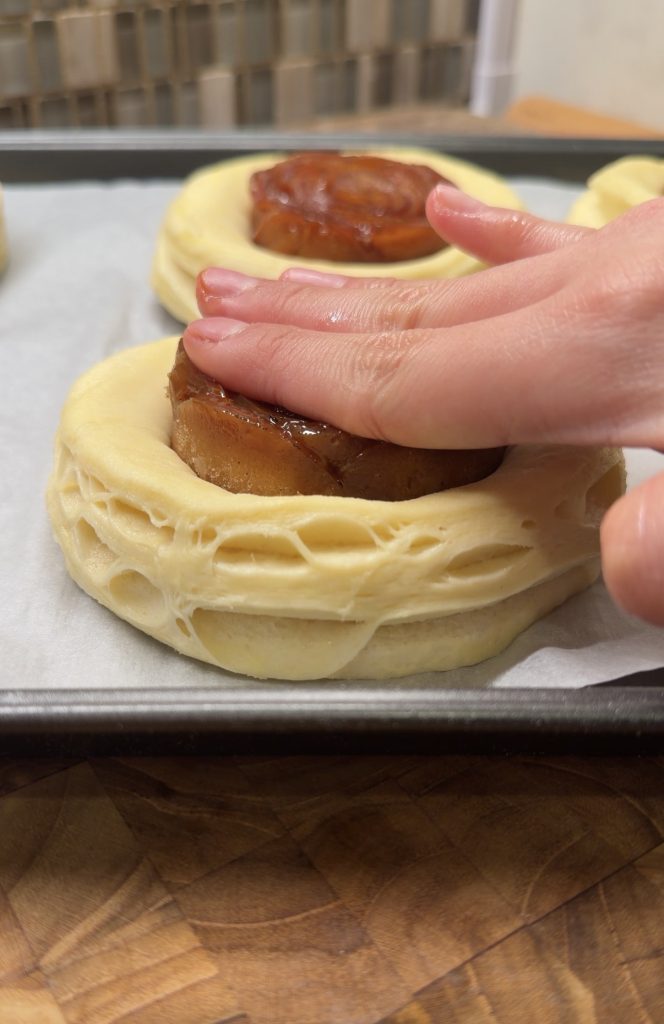
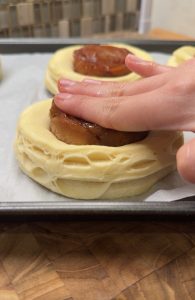
- Assemble: Preheat oven to 350°F. Remove the caramel apple roses from the freezer and pop them out of the mold. Press one rose gently into the center of each proofed danish.
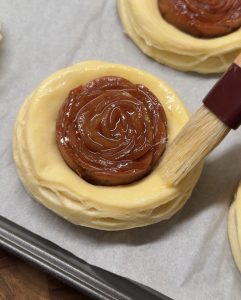
- Egg wash: Mix together egg, egg yolk, and milk. Brush egg wash over the exposed danish dough around the rose — do not brush the sides of the danish or it will prevent the layers from opening up as they bake.
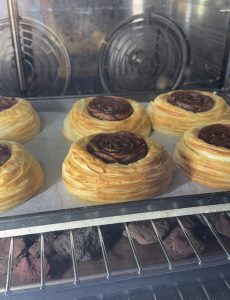
- Bake: Bake for 25-30 minutes until the danish is deeply golden brown and the layers are visibly flaky and separated.
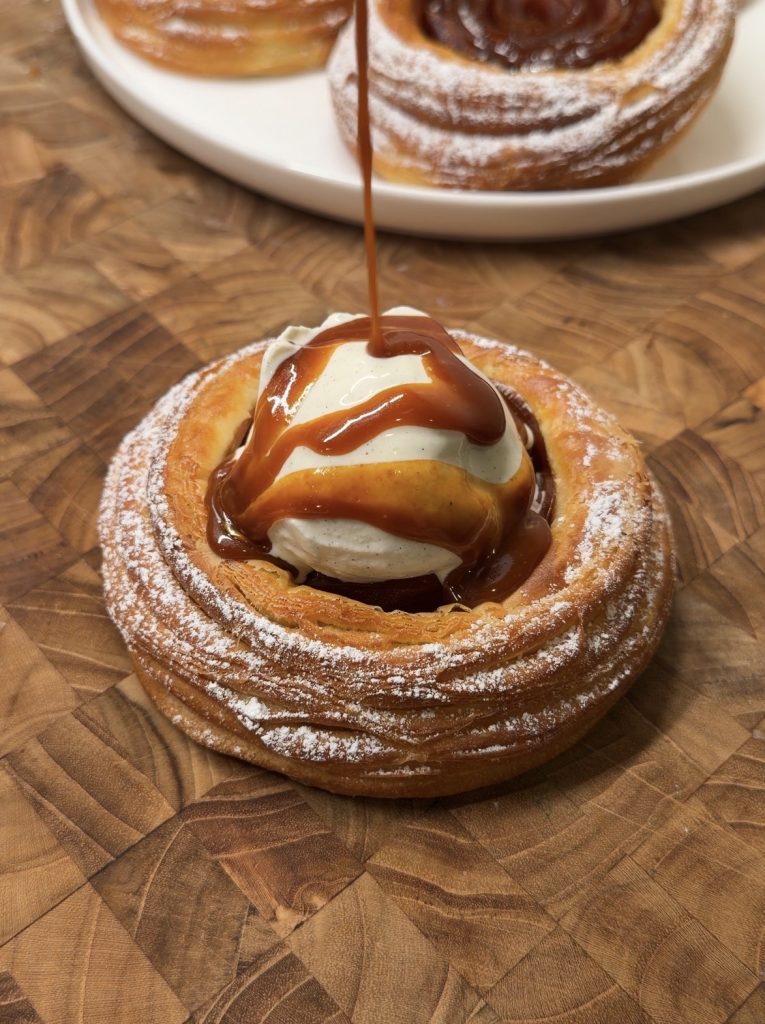
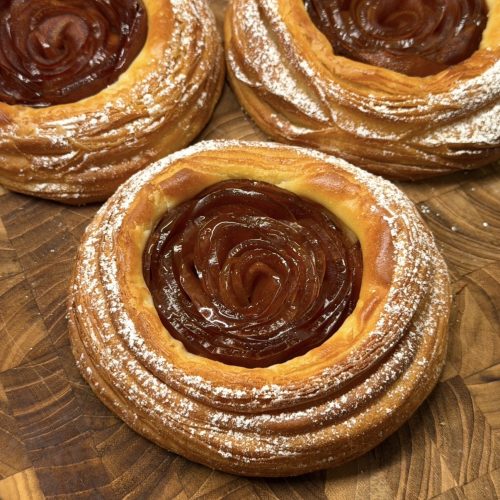
- Finish: Let cool slightly. Place a mason jar lid over each rose and dust powdered sugar generously over the exposed danish. Serve warm with vanilla ice cream and extra caramel.
Storage
Storage
Best eaten the day they’re baked while the danish layers are at their crispiest and flakiest. Store at room temperature in air tight container for up to 1 day.
Reheating
- Oven: 325°F for 8-10 minutes to bring the layers back to life
- Air fryer: 325°F for 5 minutes
Make Ahead
The caramel apple roses can be made and frozen in the mold up to 1 week ahead — a huge time saver. The détrempe and butter block can be made 2-3 days ahead and kept refrigerated. Laminate, proof, and bake the day you want to serve.
Apple Rose Tarte Tatin Danish
Equipment
- 2 6-cavity silicone mold
- 1 17 in x 11 in sheet pan
Ingredients
Danish Dough (Détrempe)
- 500 g bread flour
- 125 g T65 flour
- 307 g iced water temperature calculated
- 70 g sugar
- 30 g non fat milk powder
- 57 g unsalted butter cold and cut into small cubes
- 8 g instant yeast
- 13 g salt
Lamination Butter
- 310 g unsalted butter
Egg Wash
- 1 egg
- 1 egg yolk
- 60 g milk
Apple Roses
- 7 apples
- 2 2.5 inch 6-cavity silicone mold I use this one
Vanilla Bean Caramel
- 160 g granulated sugar
- 1 vanilla bean pod seeds scraped
- 85 g unsalted butter cut into small cubes
- pinch of salt
For Serving – OPTIONAL
- powdered sugar for dustin
- vanilla ice cream
- extra caramel
Instructions
NIGHT BEFORE — MAKE THE DÉTREMPE
- Mix the dough: In a stand mixer with a dough hook combine bread flour, T65 flour, sugar, milk powder, salt, cold butter cubes, iced water, and instant yeast. Knead on low until everything comes together then increase to medium and knead until the dough is smooth and forms a thin windowpane. Target final dough temperature is 75°F — use mostly ice water to hit this.
- First rest: Shape into a smooth ball, cover, and rest for 20 minutes.
- Rough fold: Degas the dough and form into a rough rectangle. Do one rough letter fold — fold the bottom third up and the top third down — just to get it into a manageable rectangular shape. Cover and rest another 20 minutes.
- Roll and freeze: Lightly flour a 17×11 inch sheet pan. Roll the dough out evenly to fill the entire pan. Cover tightly and place in the freezer for 30 minutes then transfer to the fridge overnight. If using same day freeze for around 2 hours then transfer to fridge — it will be ready to use at that point.
- Make the butter block: Fold parchment paper or guitar sheets into an 8.5×11 inch rectangle. Temper the butter with a rolling pin, beating and rolling it until pliable and smooth. Roll evenly to fill the dimensions. Refrigerate overnight.
NEXT DAY — MAKE THE APPLE ROSES
- Soften the apples: Place thinly sliced apples in a bowl of water and microwave for 3-5 minutes until the slices bend easily without snapping. Drain and pat completely dry with paper towels.
- Form the roses: Overlap the apple slices in a line about 10 inches long with curved edges facing up. Roll up tightly from one end to form the base of the rose. Once you have a foundation shape add more apple slices around the outer edges to build the rose to your desired size — aim to fit your 6-cavity silicone mold.
- Set in mold: Place each rose face down into the mold cavities so the curved petal edges face downward. Using a knife trim the bottom of each rose flush with the top of the mold to remove excess. Place the mold in the freezer while you make the caramel.
MAKE THE CARAMEL
- Infuse the sugar: Scrape the seeds from the vanilla bean pod and rub them into the sugar with your fingers until evenly distributed.
- Make the caramel: Add the vanilla sugar to a small saucepan over medium heat. Heat without stirring too often until the sugar melts and turns a deep amber color at around 330°F. Remove the pan from the heat and add the butter cubes — it will bubble vigorously, stir until fully combined. Add a pinch of salt.
- Pour into mold: Working quickly pour approximately 25 g of caramel into each cavity of your second silicone mold. The caramel sets fast so move quickly. Alternatively pour the caramel onto a nonstick or silicone mat, let cool until just barely pliable, then cut into 25 g portions with a knife and press into the mold cavities — this is actually easier if the caramel has already hardened.
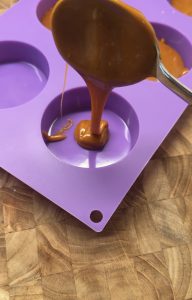
- Melt caramel if needed: Preheat oven to 350°F. If your caramel has hardened in the mold place the mold on a sheet pan and put in the oven just until the caramel is evenly melted across the bottom of each cavity.
BAKE THE APPLE ROSES
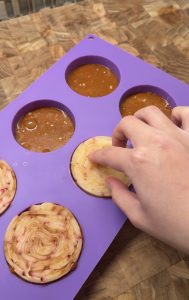
- Assemble and bake: Remove the apple roses from the freezer and place them face down into the mold cavities with the melted caramel. Bake at 350°F for 40-50 minutes until the caramel has saturated all the layers of the apple rose and is deeply golden. Remove from oven, let cool slightly, then place the mold in the freezer to set while you laminate.
LAMINATE THE DOUGH
- Temper the butter block: Remove the butter block from the fridge and let it sit at room temperature for around 10 minutes depending on your kitchen temperature. The butter should feel pliable and smooth — press gently with your finger and it should indent without cracking. Target around 51°F for the butter and 39°F for the dough.
- Lock in the butter: Lightly flour your work surface. Remove the dough from the sheet pan — it should already be the right dimensions. Place the butter block in the center of the dough. Cut and fold the dough edges over the butter to fully enclose it, closing the center seam. Press along the surface lightly with a rolling pin to soften and adhere the butter to the dough, flipping and pressing both sides.
- First letter fold: Roll the dough out to approximately 24 inches long at 8 mm thickness applying light even pressure throughout — uneven pressure creates uneven lamination. Perform a letter fold — fold the bottom third up, then fold the top third down over it so you have 3 layers stacked. Cover and refrigerate 15 minutes.
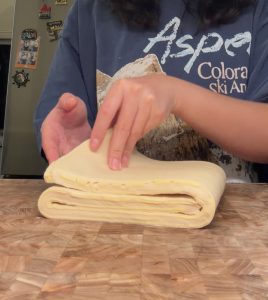
- Second and third letter folds: Remove from fridge and use a knife to cut along the two folded edges to release tension — these cut edges always go on the sides as you roll, never at the leading edges. Roll out again to the same dimensions and perform another letter fold. Refrigerate 15 minutes. Repeat one more time for a total of 3 letter folds.
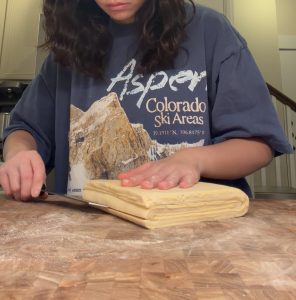
- Final roll: Roll out to approximately 8-10 mm thickness in a 12×8 inch rectangle. If the dough feels soft refrigerate another 15 minutes before cutting.
- Cut the danish: Use a 10 cm circular cutter to punch out 6 circles from the dough, or cut 4×4 inch squares if you prefer cleaner edges or don't have a circular cutter.
- Final proof: Place cut dough on a parchment-lined tray. Lightly cover with plastic wrap and let final proof until noticeably puffy and the lamination layers start to visibly separate — about 2-3 hours at room temperature.
ASSEMBLE AND BAKE
- Assemble: Preheat oven to 350°F. Remove the caramel apple roses from the freezer and pop them out of the mold. Press one rose gently into the center of each proofed danish.
- Egg wash: Mix together egg, egg yolk, and milk. Brush egg wash over the exposed danish dough around the rose — do not brush the sides of the danish or it will prevent the layers from opening up as they bake.
- Bake: Bake for 25-30 minutes until the danish is deeply golden brown and the layers are visibly flaky and separated.
- Finish: Let cool slightly. Place a mason jar lid over each rose and dust powdered sugar generously over the exposed danish. Serve warm with vanilla ice cream and extra caramel.