Banh Mi Baguette
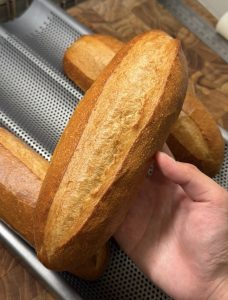
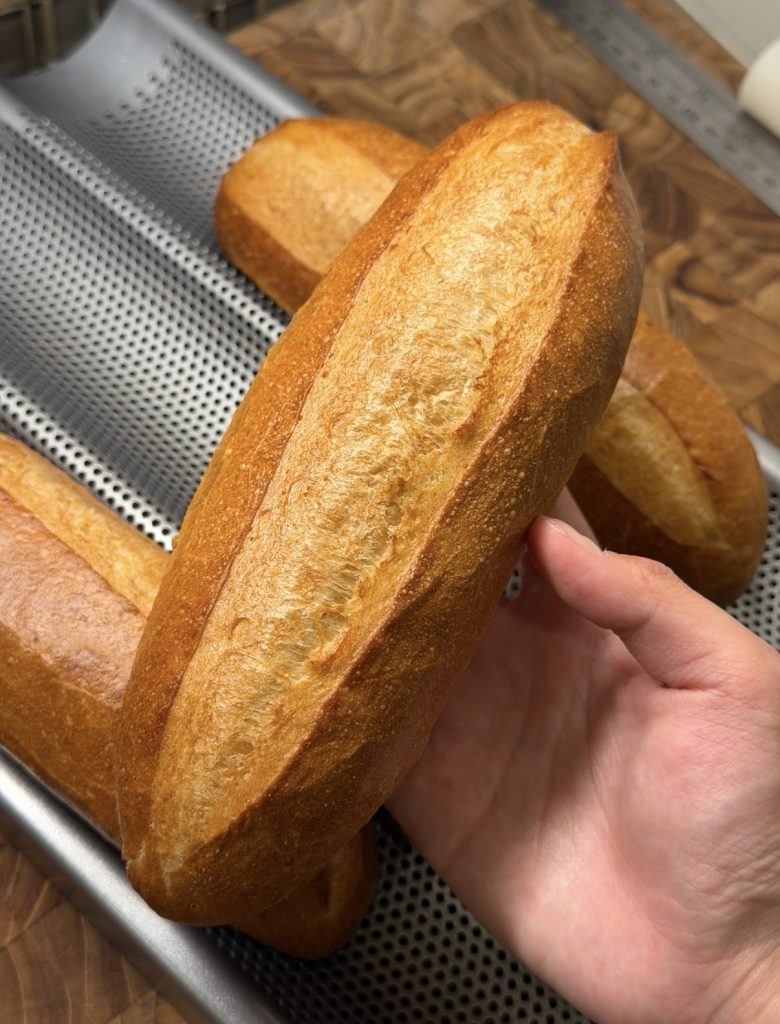
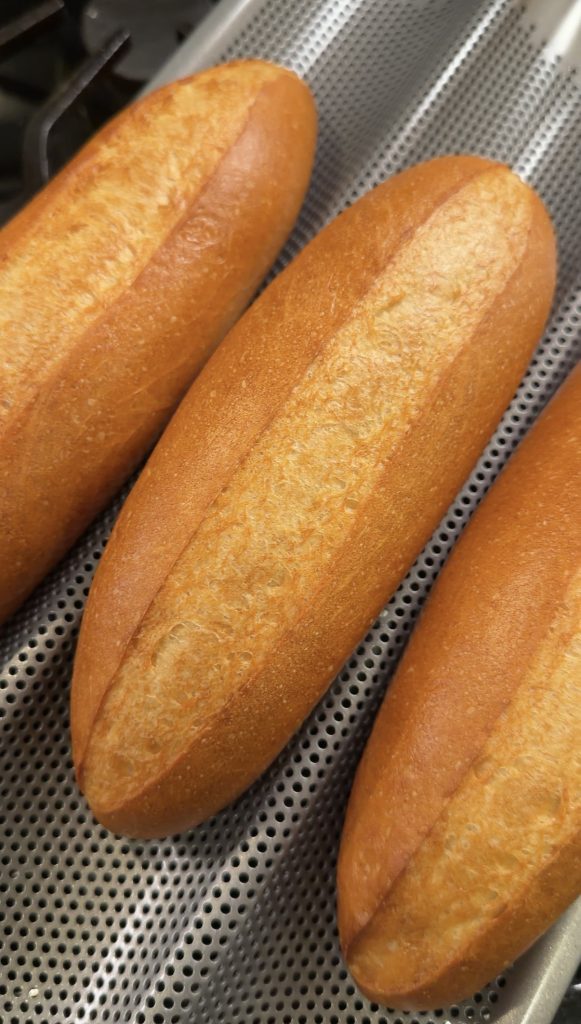
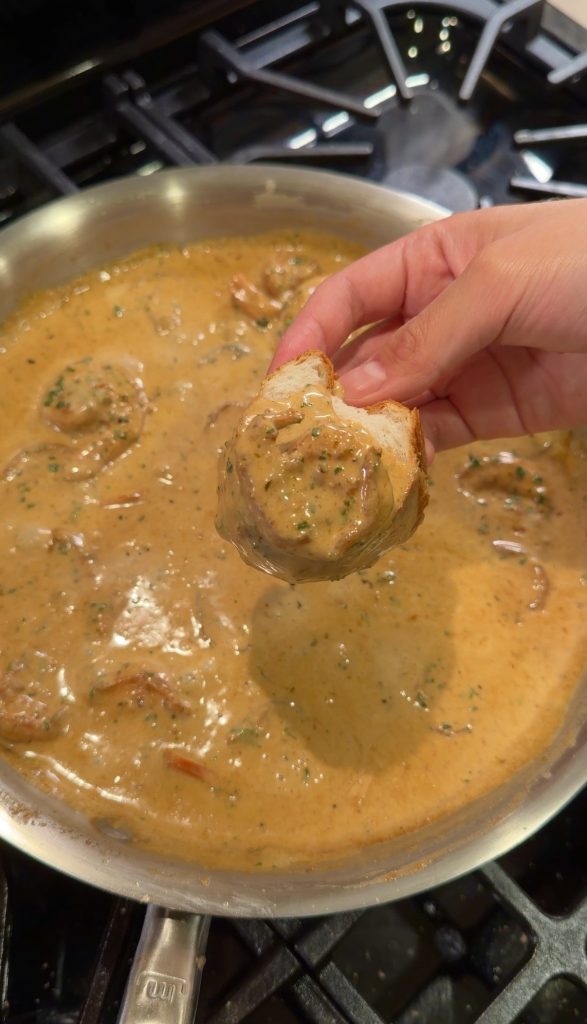
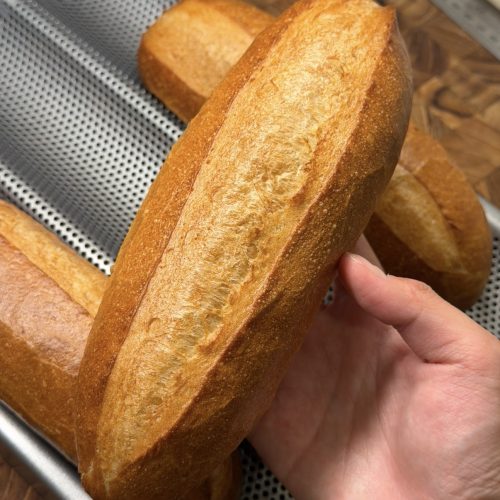
A proper banh mi baguette is one of the most underrated breads to make at home — a thin, crackly crust that shatters when you bite into it and a light, airy interior that soaks up fillings without getting soggy. This Vietnamese-style baguette is lighter and crispier than a French baguette, with a delicate crust that comes from high heat and steam during baking. Dip it into my Creamy Garlic Shrimp for the combination that inspired this whole recipe — a pairing I fell in love with from CR Surf and Turf right here in Austin.
Why You’ll Love This Recipe
- That crust — thin, crackly, and audibly crispy — you’ll hear it shatter when you bite
- Light and airy interior — not dense like a regular baguette, perfect for soaking up fillings without falling apart
- Six baguettes per batch — make a full batch and freeze what you don’t use
- The perfect vessel for creamy garlic shrimp — the crispy exterior and airy crumb soaks up that cream sauce in the most incredible way
- Steam baking technique explained — including options for every home oven setup
My Latest Videos
Banh Mi Baguette: The Bread That Makes the Sandwich
The Vietnamese-style baguette is distinctly different from a French one, lighter, crispier, more delicate, and getting that right at home comes down to two things: the flour blend and the steam during baking. This recipe uses a combination of bread flour and cake flour which gives you a lighter crumb than all bread flour alone. The steam is what creates that signature thin crackly crust. I’m sharing a few different steam methods depending on your oven setup so everyone can get there regardless of what equipment they have.
This baguette is also what I use to serve my Creamy Garlic Shrimp — a combination inspired by the creamy Cajun shrimp at CR Surf and Turf in Austin, one of my favorite local spots. If you’re ever in Austin go try it. Until then make this at home and you’ll understand why.
Banh Mi Baguette Ingredients
Baguette Dough
- 400 g bread flour
- 100 g cake flour
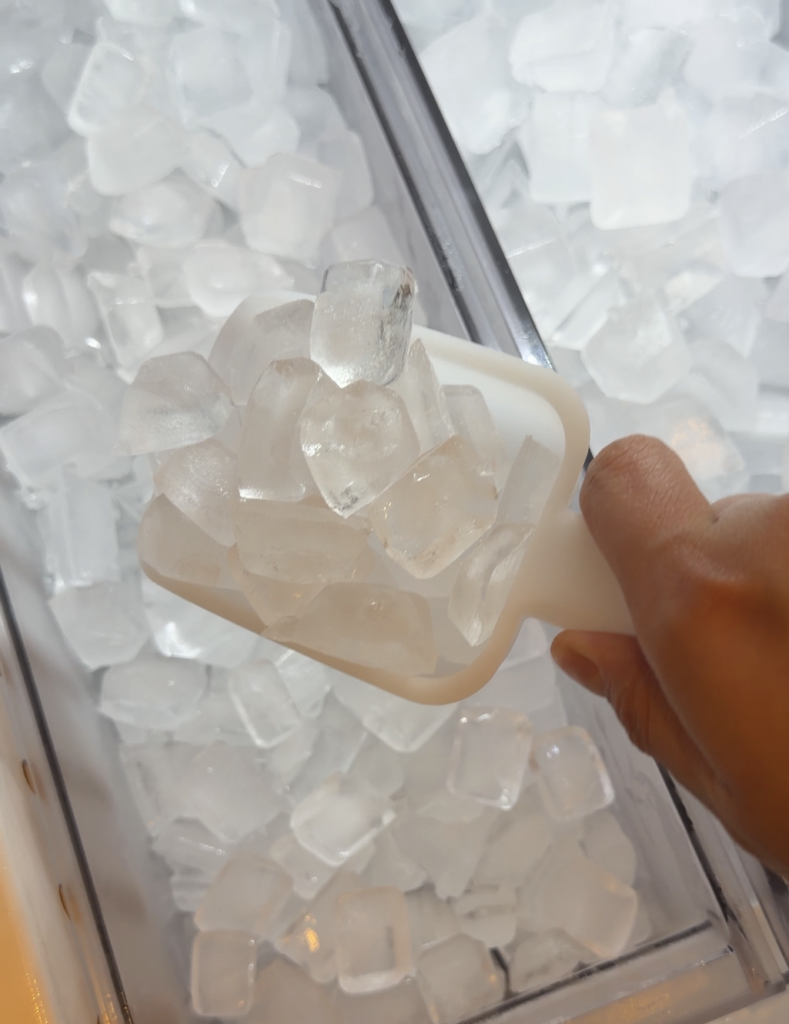
- 340 g ice water
- 7 g instant dry yeast
- 8 g salt
- 8 g sugar
For Baking
- Water, for steaming (¾ cup boiling water if using lava rocks/cast iron method)
- Spray bottle filled with water (if using spray method)
The Flour Blend
The combination of bread flour and cake flour is what gives you the light cotton candy crumb you think of when you see a banh mi. Bread flour provides the gluten structure you need for the dough to hold its shape and develop an open crumb, while cake flour — with its lower protein content — lightens the crumb and gives you that delicate, airy interior that’s characteristic of a Vietnamese-style banh mi baguette.
Why Ice Water?
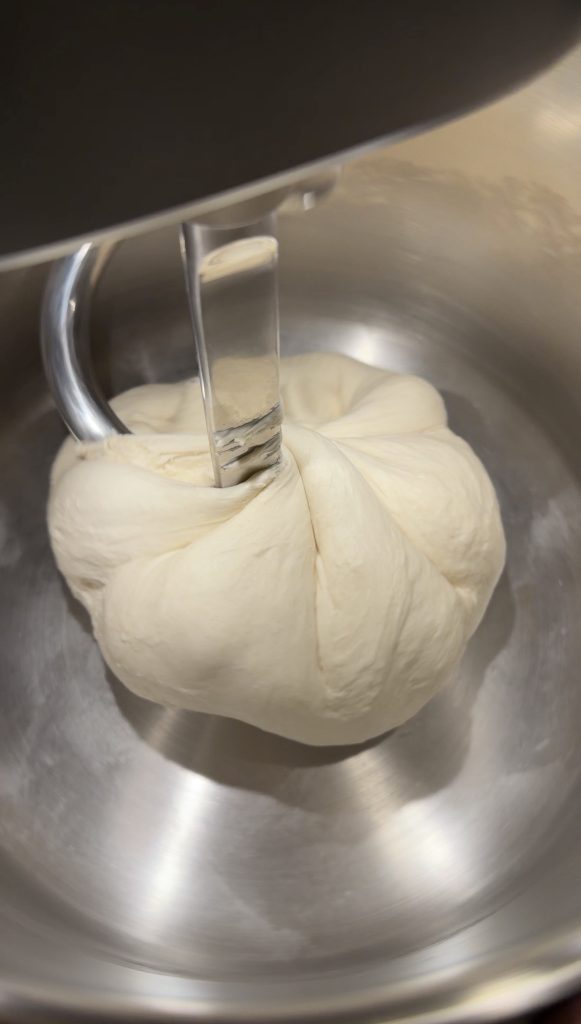
The reason we use ice water is because the target final dough temperature for this baguette is around 75°F, and since your mixer generates heat during kneading you need to start cold to counteract that friction heat and land in the right range.
The same concept applies to all bread baking — the colder your ingredients going in, the more buffer you have against the dough warming up during mixing. I go into a lot more detail on dough temperature, water temperature calculations, and why it all matters in my Salt Bread (Shiopan) recipe. The same principles apply here and to bread baking in general, though the target final dough temperature and mixing method will vary depending on the recipe.
Keeping your dough temperature in range also matters for fermentation quality. Dough that ferments too warm rises too fast and doesn’t have time to develop flavor — slow and cool is always better for taste. This is why recipes like my Brioche Nanterre use overnight cold fermentation — the longer slower ferment develops a noticeably more complex flavor that a same-day rise just can’t replicate. For this banh mi the flavor benefit of cold fermentation is more subtle since it’s a lean instant yeast dough, but the principle still applies and the dough temperature still matters for texture and structure.
Shaping the Baguette
The shaping technique is what gives you that classic banh mi form. After rolling each dough ball into an oval with a rolling pin you’ll roll it up tightly — pressing down with your fingertips each time you complete a roll to create tension and seal each layer. This builds the structure that holds the shape during proofing and baking. Rolling the ends out with your hands tapers them to the classic pointed baguette tips. The finished baguette should be around 7-8 inches long — shorter and thicker than a French baguette, which is exactly right for banh mi.
Steam and Baking — Everything You Need to Know
Steam is the single most important factor in getting that thin crackly banh mi crust. In the first few minutes of baking the steam keeps the surface of the dough moist and pliable so the bread can spring up fully before the crust sets. Without steam the crust sets too early and you get a thick, dull exterior instead of that signature shatter.
A note on oven spring: the initial oven spring — that burst of rapid rise in the first few minutes of baking — is best when your oven is ripping hot and fully preheated. I preheat my oven for up to an hour before the bread even goes in, starting the preheat while the baguettes are doing their final rise so everything is ready at the same time.
How To Make Banh Mi Baguette
MAKE THE DOUGH
- Mix the dough: Add bread flour, cake flour, ice water, instant yeast, salt, and sugar to a mixing bowl fitted with a dough hook. Knead on low speed until all dry ingredients are incorporated and no dry flour spots remain. Increase to medium speed and knead until the dough is smooth and passes the windowpane test — stretch a small piece and it should be translucent without tearing.
- Bulk ferment: Transfer to a bowl, cover, and let rise until doubled in size.
- Divide and preshape: Degas the dough and divide into 6 equal pieces of approximately 140g each. Roll each into a taut smooth ball, place on a lightly floured surface, cover, and let bench rest for 20 minutes.
SHAPE
- Shape the baguettes: Working one piece at a time use a rolling pin to flatten each ball into a rough oval shape. Starting from the top edge roll the dough down toward you tightly — pressing down firmly with your fingertips each time you complete a full roll to create tension and seal each layer. Continue rolling until you reach the bottom. Roll the ends out with your hands to taper them into pointed tips. The finished baguette should be around 7-8 inches long.
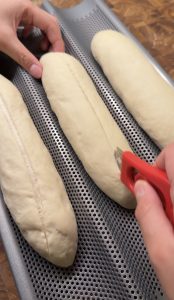
- Final proof: Place shaped baguettes on a non-stick perforated baguette tray (like this one) or on parchment paper if you don’t have one. Cover loosely and let rise until doubled in size.
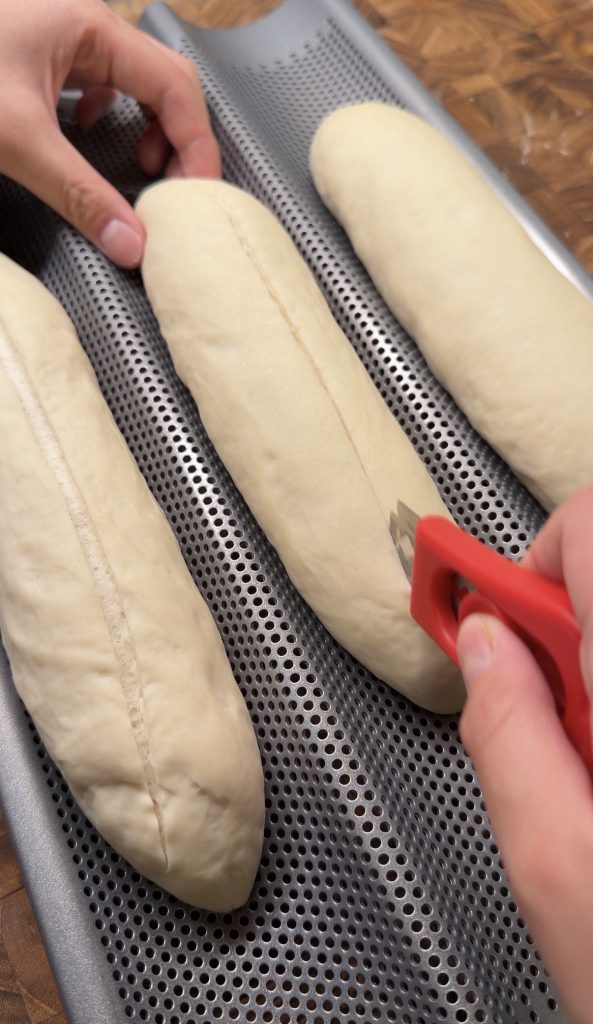
- Score: Once doubled use a sharp lame or razor blade to score one straight cut down the center of each baguette at a slight angle.
BAKING — STANDARD HOME OVEN (most people)
- Preheat: Preheat your oven to 450°F with a cast iron skillet or a tray of lava rocks (like these) on the bottom rack. Preheat for at least 45-60 minutes before baking — a fully saturated oven gives you the best oven spring.
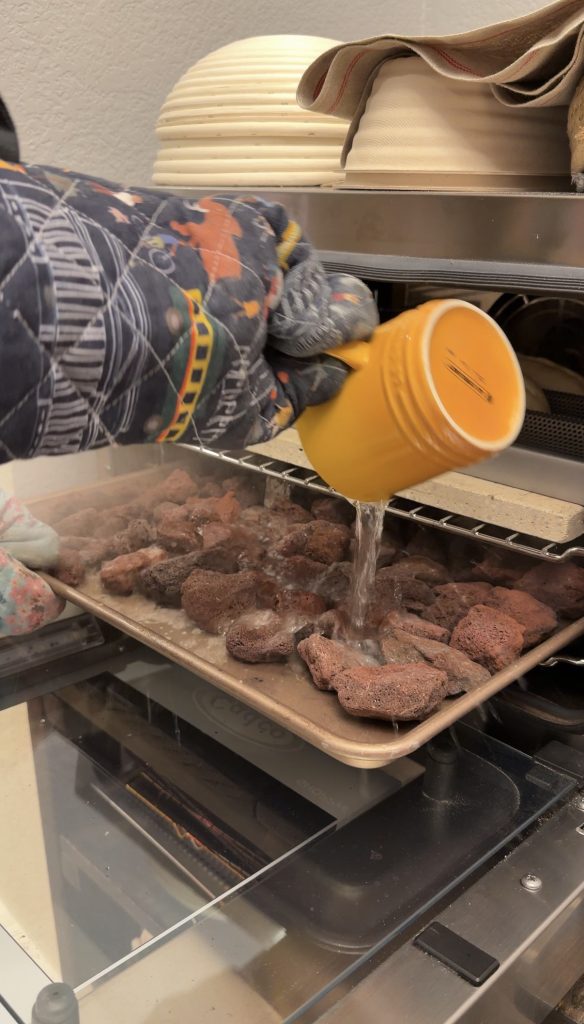
- Create steam and bake: When ready to bake have ¾ cup of boiling water ready. Load the baguettes into the oven and immediately pour the boiling water into the cast iron skillet or lava rocks and close the oven door quickly to trap the steam. Lower the oven to 400°F immediately after loading and bake for 18-22 minutes or until deeply golden brown. At around the 5 minute mark briefly open the oven door for just a moment to release excess steam — this helps the crust develop properly in the second half of baking.
Alternatively — if you don’t have a cast iron or lava rocks, spray each baguette generously with a spray bottle 5-10 times just before loading into the oven for a lighter steam effect. Lower the oven to 400°F immediately after loading and bake for 18-22 minutes.
BAKING — CONVECTION OVEN (my setup)
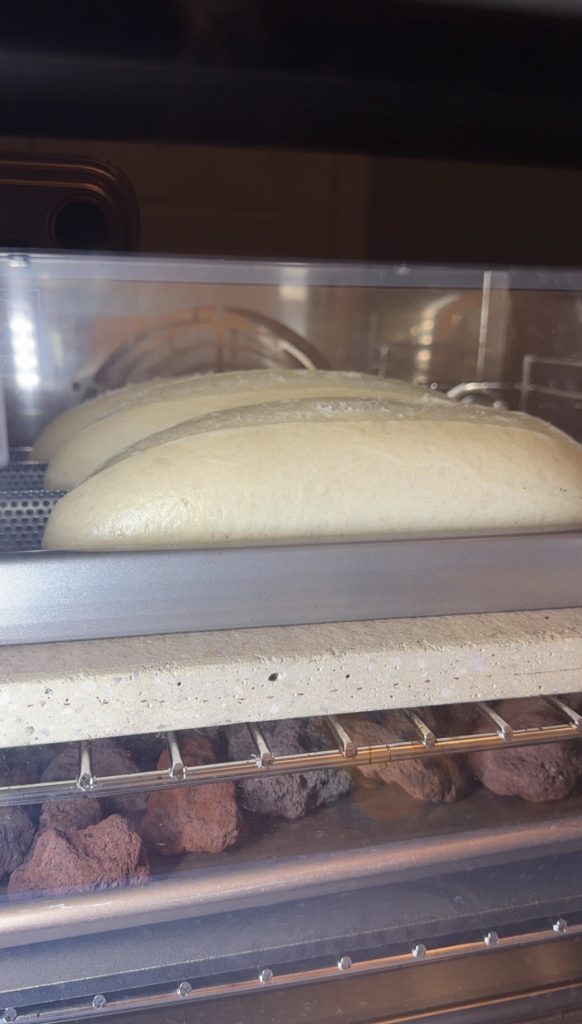
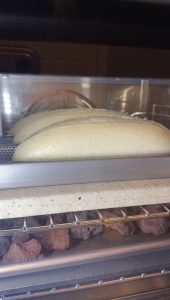
I use a countertop commercial convection oven with a baking steel and lava rocks on the bottom rack and a custom sized Fibrament baking stone on the middle rack. I preheat for around an hour before baking.
Because of the convection fan I turn the oven off immediately after loading the bread — the fan would set the crust too early before the bread has had a chance to fully spring. I add the boiling water to the lava rocks, close the door, and time for 5 minutes. Then I briefly open the door to release excess steam, turn the oven back on to 400°F, and finish baking for 12 minutes until golden brown.
This setup works for my specific oven — a countertop convection that runs at 120V with lower heat retention than a full-size oven. The doubled up baking steel and stone compensates for that. If you have a standard full-size convection oven you may not need to double up on a baking stone and steel! Experiment and see what works best for your setup.
Every oven is different — don’t be afraid to experiment with steam levels and temperatures to find what gives you the best crust in your specific setup.
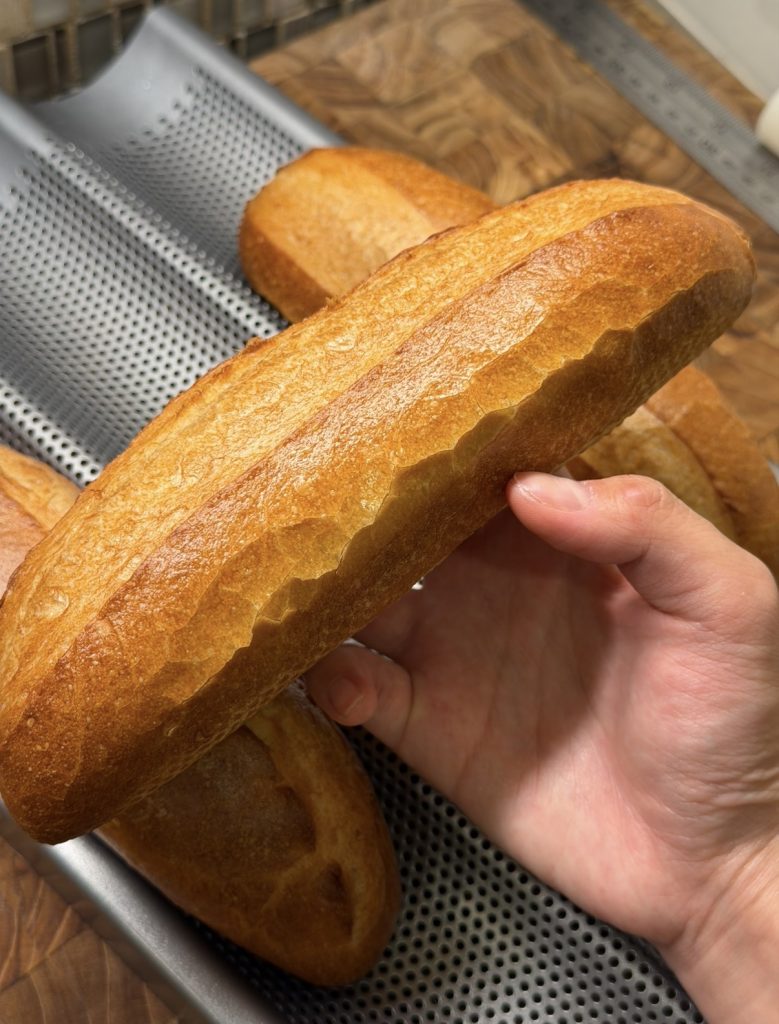
- Remove and cool: Remove from the oven and place on a wire rack. You should immediately hear the baguettes crackling — that sound is the crust contracting as it cools and the moisture inside escaping as steam. It’s the sign of a properly baked baguette with a thin crackly crust. Let cool for at least 15-20 minutes before cutting — cutting too early releases steam and makes the interior gummy.
Serving Suggestions
The best way to enjoy this baguette is dip it into my Creamy Garlic Shrimp recipe! The crackly exterior and airy crumb soaks up that cream sauce beautifully and the contrast of crispy bread against rich creamy shrimp is genuinely one of the best things I’ve eaten. Inspired by my favorite appetizer at CR Surf and Turf in Austin — if you’re ever there go try the original!
Other great uses:
- Classic banh mi with pickled daikon, carrots, cilantro, jalapeño, and your protein of choice
- Torn and served alongside soups or stews for dipping
- Sliced and toasted for bruschetta
Storage & Reheating
- Storage Banh mi baguettes are best eaten the day they’re baked when the crust is at its crispiest. Store at room temperature uncovered — wrapping them traps moisture and softens the crust.
- Freezing These freeze beautifully. Once completely cool place in an airtight bag and freeze for up to 1 month.
- Reheating
- Oven (best method): Bake at 350°F for 8-10 minutes directly from frozen or from room temperature until the crust is crackly again
- Air fryer: 350°F for 4-5 minutes for a quick reheat with a crispy result
Banh Mi Baguette
Ingredients
Baguette Dough
- 400 g bread flour
- 100 g cake flour
- 340 g ice water
- 7 g yeast
- 8 g salt
- 8 g sugar
For Baking
- 3/4 cup boiling water for steam method (Reference this section (BAKING — STANDARD HOME OVEN and BAKING — CONVECTION OVEN) for more info on baking and steam!)
- spray bottle with water alternative steam method
Instructions
- Mix: Combine bread flour, cake flour, ice water, yeast, salt, and sugar in a stand mixer with a dough hook. Knead on low until incorporated then medium until smooth and passing the windowpane test.
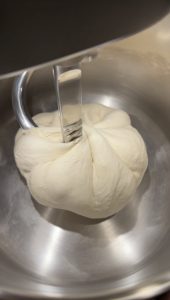
- Bulk ferment: Shape the dough into a smooth ball, place in a bowl, cover, and let rise until doubled.
- Divide: Degas and divide into 6 pieces of approximately 140g each. Roll into taut balls, cover, and bench rest 20 minutes.
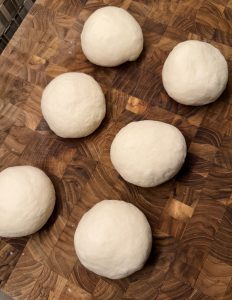
- Shape: Flatten each ball into an oval with a rolling pin.
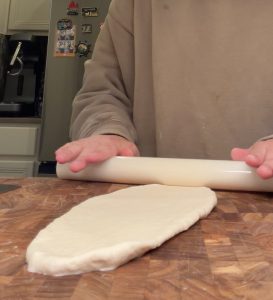
- Roll tightly from the top pressing down with fingertips each roll to build tension.
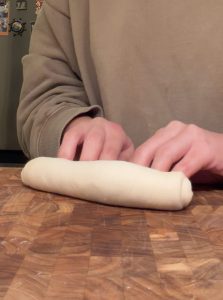
- Taper the ends with your hands to 7-8 inches long.
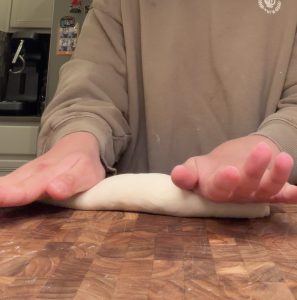
- Final proof: Place on a perforated baguette tray or parchment. Cover and rise until doubled.
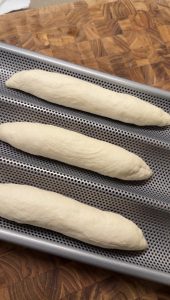
- Score: Score one cut down the center with a sharp lame.
- Standard oven: Preheat to 450°F with cast iron or lava rocks on the bottom rack for 45-60 minutes. Load bread, pour ¾ cup boiling water into cast iron/rocks immediately. Bake 18-22 minutes. Open door briefly at 5 minutes to release steam.
- Convection oven: Preheat to 500°F with baking steel and stone for 1 hour. Load bread, add boiling water to rocks, turn oven off for 5 minutes. Open door briefly, turn oven back on to 400°F and bake 12 minutes until golden.

- Cool: Cool on a wire rack. Listen for the crackling — that's the sign of a perfect crust!