Brioche Nanterre
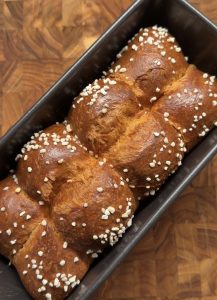
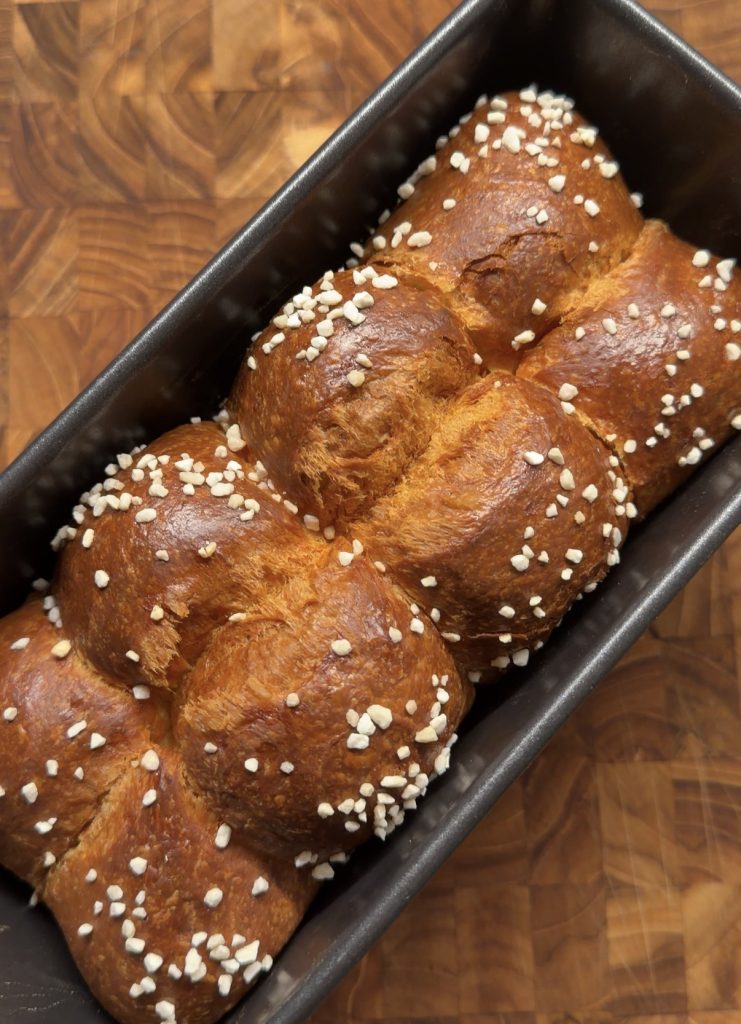
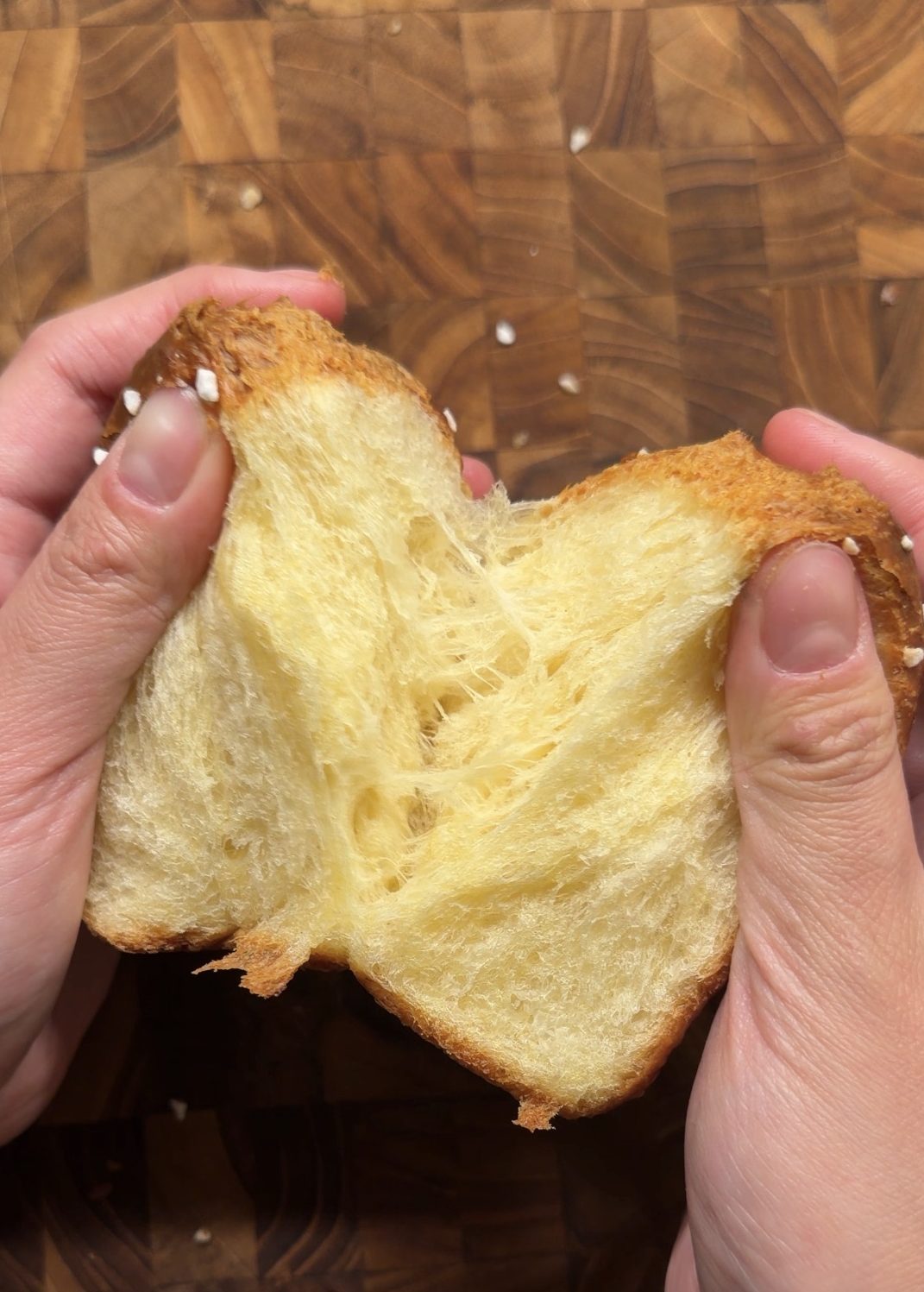
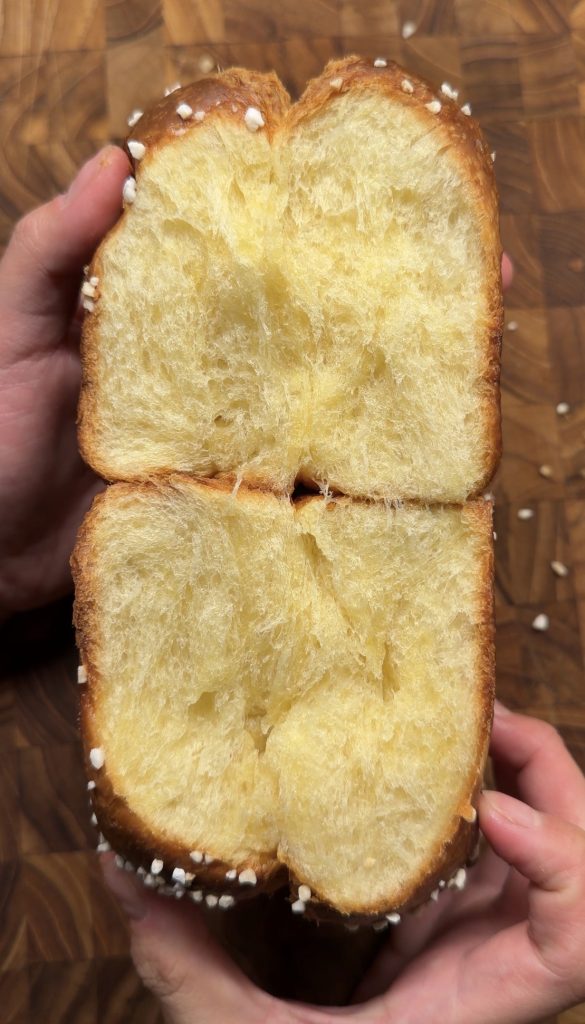
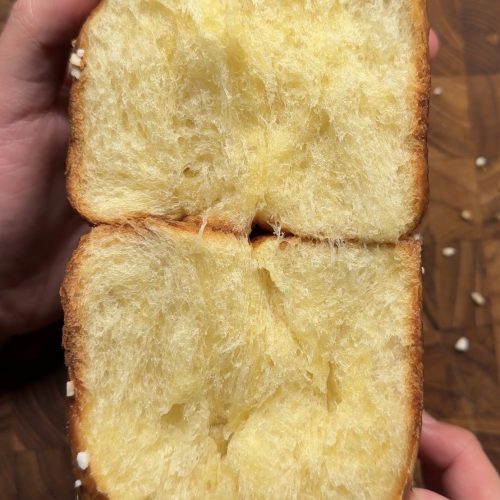
Brioche Nanterre is the gold standard of enriched breads. So buttery, soft, with a rich golden crumb that pulls apart in the most satisfying way, but I will say this is not a quick bake! It’s a two-day process that requires patience, cold temperatures, and attention to detail. But the result will be perfectly fulffy and so worth it! Once you understand why each step matters, the process becomes completely intuitive.
Why You’ll Love This Recipe
- That crumb — ultra soft, feathery, and rich with butter in every single pull
- Cold fermentation — overnight in the fridge deepens the flavor dramatically and makes the high-fat dough much easier to handle
- Bakery quality at home — with the right technique this is genuinely as good as anything you’d find at a professional bakery
- Worth every step — this is the kind of bake that teaches you something every single time you make it
My Latest Videos
Brioche Nanterre: All About the Details
Brioche Nanterre is one of those recipes where the details really matter. It’s not technically complicated, the ingredient list is short and the steps are straightforward, but it rewards attention and patience in a way that most recipes don’t. Cold ingredients, dough temperature checkpoints, slow butter incorporation, and an overnight cold ferment that does more for the final loaf than any shortcut ever could. Follow each step with care and the result is a loaf so soft, buttery, and deeply flavored that you’ll completely understand why brioche has been a French bakery staple for centuries.
Brioche Nanterre Ingredients
Brioche Dough
- 185 g bread flour
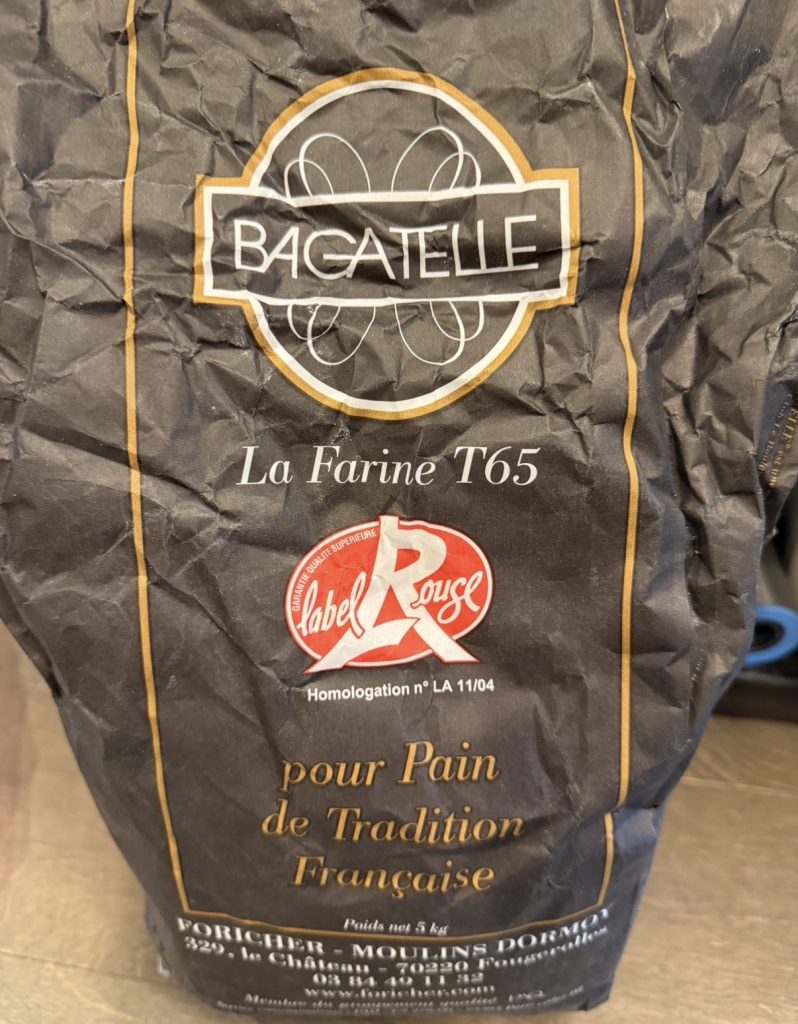
- 80 g Bagatelle T65 flour
- 133 g whole eggs, cold (about 2-3 eggs depending on size)
- 27 g whole milk, cold
- 32 g sugar
- 5 g salt
- 2.5 g instant dry yeast
- 133 g unsalted butter, cut into small cubes and kept cold
Egg Wash
- 1 egg
- 1 tbsp milk
Optional Topping
- Pearl sugar
The Flour Blend
This recipe uses two flours for a specific reason. Bread flour gives you the gluten strength needed to support the high butter content without the dough collapsing. You need that strong gluten network to hold everything together. Bagatelle T65 is a French-style flour with a slightly lower protein content and a more complex wheat flavor, it adds tenderness and that distinctly French brioche character to the crumb. Traditionally brioche is made with T55, a softer French flour that gives a more classic tender crumb, but I used T65 here simply because that’s what I had at home and the results were excellent. If you can’t find T65 you can substitute all-purpose flour for the T65 portion, but the flavor and crumb texture will be slightly different.
Cold Ingredients and Dough Temperature
Temperature control is the single most important technical factor in making brioche. The butter content is so high that if your dough gets too warm at any point during mixing the butter will melt into the dough rather than emulsifying properly, and you’ll end up with a greasy, slack dough that won’t develop proper structure.
The night before or at least a few hours before mixing, weigh all your ingredients and place them in the fridge — including your eggs, milk, and your mixing bowl. Cold ingredients give you a crucial head start against the heat your mixer generates during kneading.
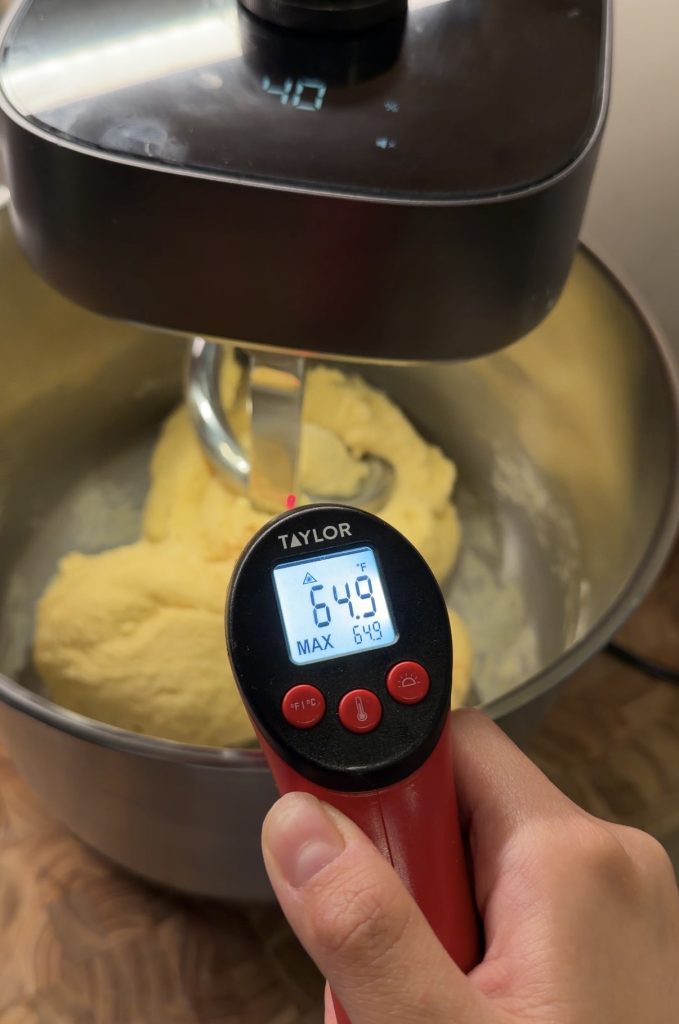
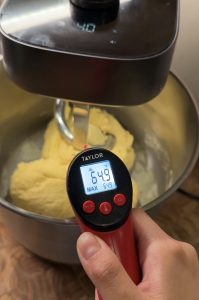
I found for me, if my dough temperature before butter addition is around 68°F, my final dough temp will land perfectly at 75°F. If at any point during the initial mix your dough temperature climbs too high, stop the mixer, press plastic wrap directly against the surface of the dough, and place the entire mixer bowl in the fridge until the temperature comes back down to around 68°F. Once butter incorporation begins your final dough temperature should not exceed 75°F!
The Butter Incorporation
The butter must go in after you’ve already built a strong gluten network, not at the beginning. Fat coats flour proteins and inhibits gluten formation, so if you add butter too early you’ll never develop the structure you need. Knead the flour, eggs, milk, sugar, salt, and yeast together first until the dough is cohesive and starting to develop strength before a single cube of butter goes in.
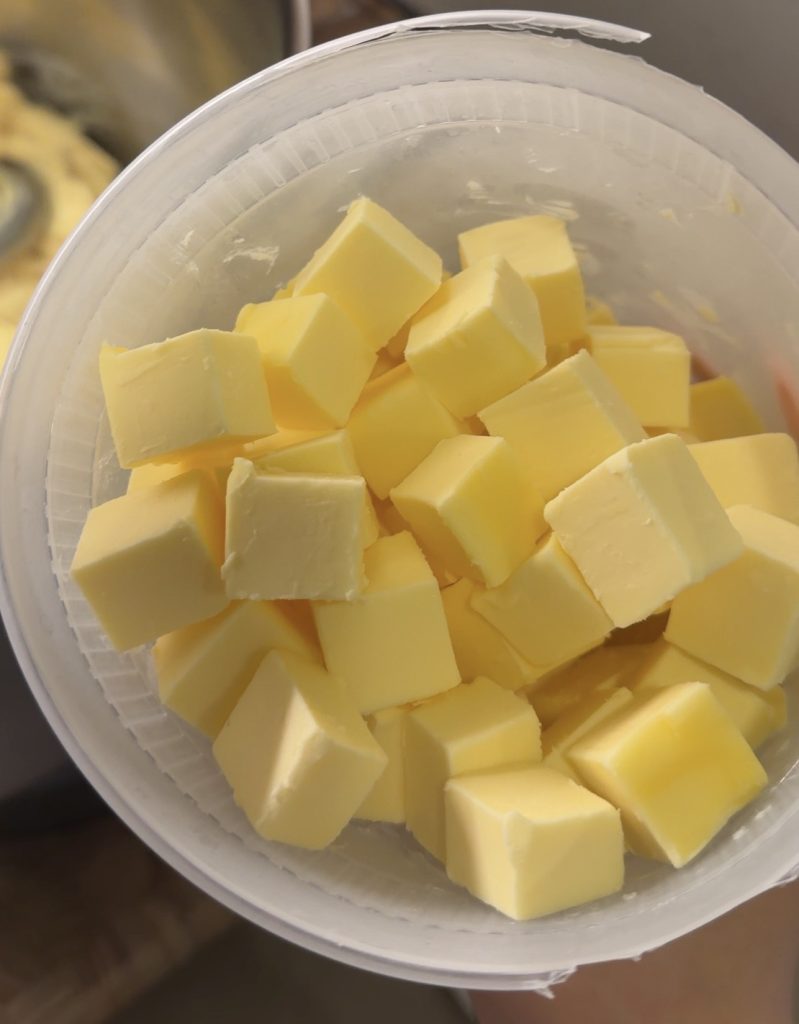
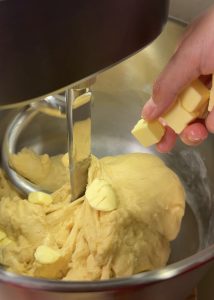
Add the butter in thirds, a few cold cubes at a time, waiting until each addition is fully incorporated before adding the next. The cold butter also helps regulate your dough temperature during this stage. Alternate between low and medium speed during butter incorporation — avoid kneading on high speed continuously as this generates heat quickly and can push your dough temperature past that 75°F limit before the butter is fully worked in.
The Cold Ferment
After bulk fermentation you’re going to fold the dough, flatten it into an airtight container, and put it in the fridge overnight. The cold ferment does two critical things:
- Flavor development — slow cold fermentation gives the yeast time to produce the complex organic compounds that give properly made brioche its distinctive deep buttery flavor.
- Workability — brioche dough with 133g of butter in it is incredibly soft and difficult to shape at room temperature. Cold fermentation firms the butter back up and makes the dough significantly easier to divide, roll, and place cleanly into the loaf tin without it sticking to everything or losing its shape.
How To Make Brioche Nanterre
- Chill everything: The night before or at least a few hours before mixing weigh all your ingredients and place them in the fridge — including your eggs, milk, butter cubes, and your mixing bowl. Cold ingredients are essential for temperature control.
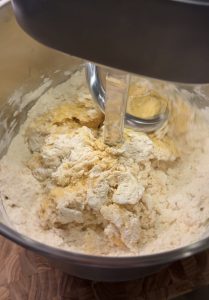
- Initial mix: In the cold mixing bowl combine bread flour, T65 flour, sugar, salt, instant yeast, whole eggs, and cold milk. Mix on low speed with a dough hook until no dry flour spots remain, then increase to medium speed and knead for several minutes until the dough comes together and starts to develop strength. You’re building gluten before the butter goes in — this is important. The dough should feel cohesive and elastic before you move to the next step.
- Check dough temperature: Before adding butter check your dough temperature — it should be around 68°F. If it’s too warm stop the mixer, press plastic wrap directly against the surface of the dough, and place the entire mixing bowl in the fridge until the temperature comes back down to 68°F.
- Add the butter: Lower the mixer speed slightly. Add the cold butter in thirds — a few small cubes at a time — waiting until each addition is fully incorporated before adding the next. Alternate between low and medium speed throughout this process — do not knead on high speed continuously as this raises the dough temperature quickly. For reference this process takes me around 15 minutes in my Ooni Halo Pro spiral mixer. Monitor your dough temperature throughout and make sure it does not exceed 75°F.
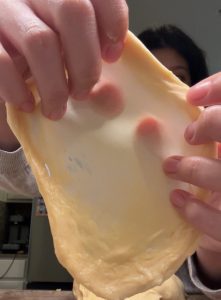
- Check for doneness: Once all the butter is incorporated the dough should look extremely smooth and glossy. Pull a small piece and do the windowpane test — stretch it between your fingers and it should be thin, smooth, and translucent without tearing. This is a stronger windowpane than you’d look for in a lean dough. Final dough temperature should not exceed 75°F.
- Bulk ferment: Shape the dough into a smooth ball and place in a covered bowl. Let bulk ferment at room temperature for 1 hour.
- Letter folds and cold ferment: Lightly flour your surface and turn out the dough. Gently degas it and perform 2 rough letter folds — folding the dough like a letter to build a little more strength and help degas. Place the dough into an airtight container, lightly flatten it, and refrigerate overnight for at least 12 hours and up to 20-24 hours.
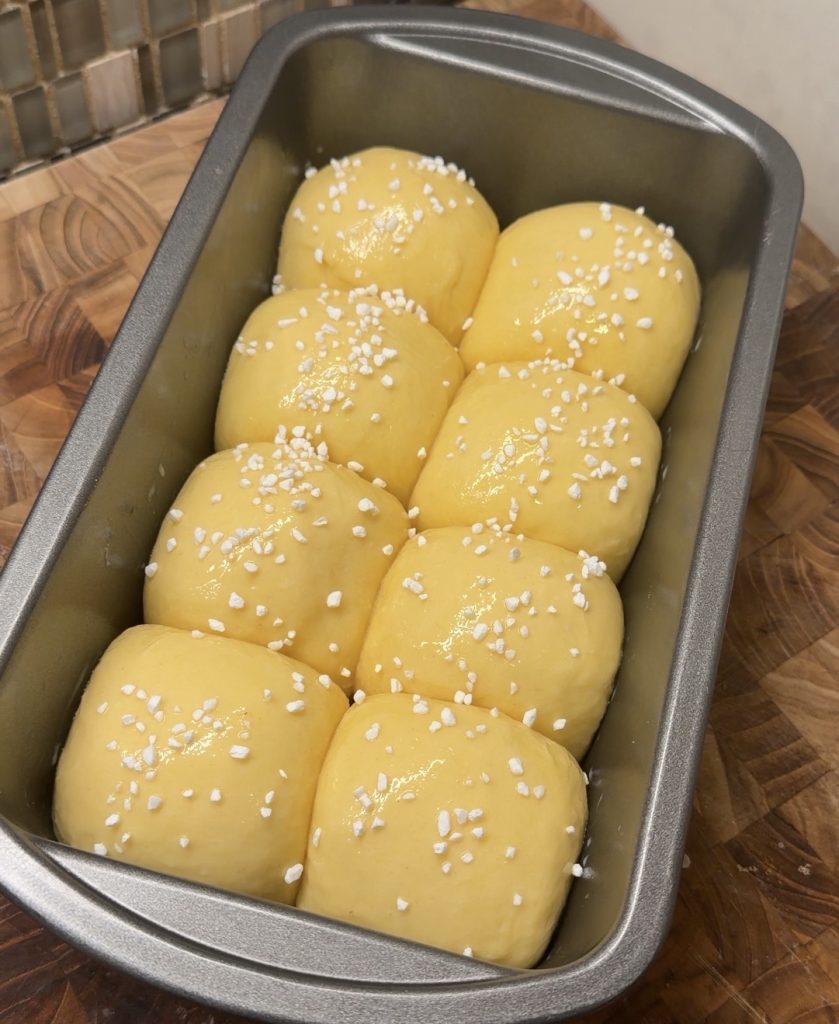
- Divide and shape: The next day remove the dough from the fridge. Working on a lightly floured surface divide the dough into 8 equal pieces of approximately 75g each. Roll each piece into a smooth tight ball, pinching any seams underneath. Place the balls side by side in a 9×5 inch loaf tin.
- Final proof: Cover and let rise at room temperature until doubled in size — this took me around 2 hours but use visual cues over time. The dough balls should look noticeably puffed and fill the tin.
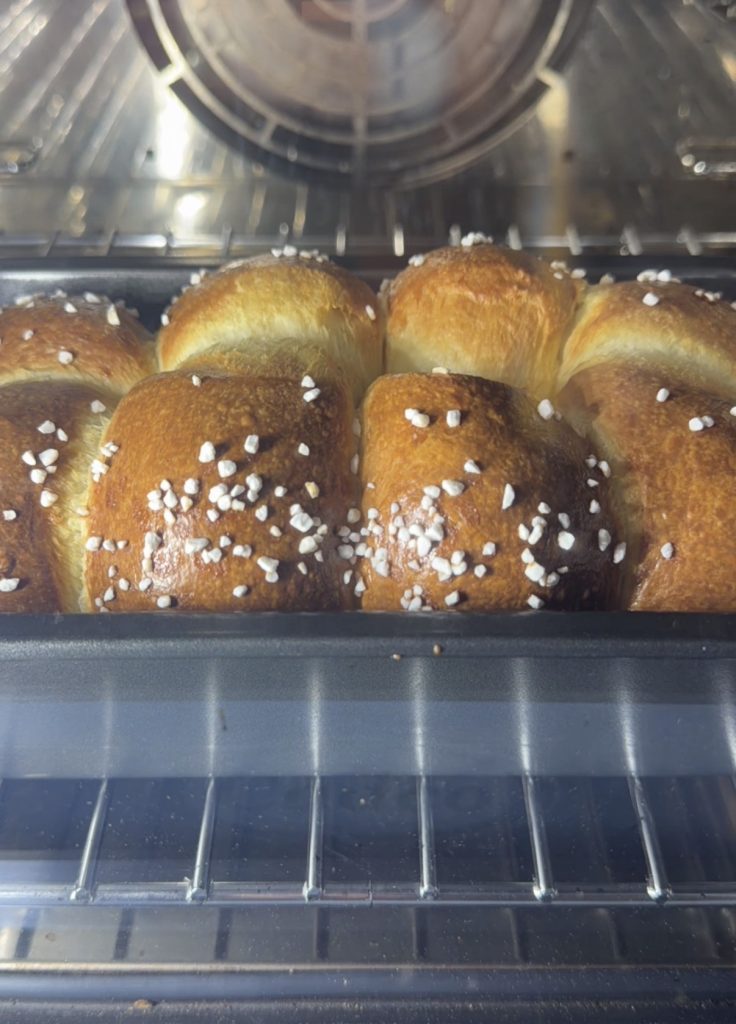
- Bake: Preheat oven to 350°F. Gently brush each ball with egg wash (egg + milk) being careful not to deflate the dough. Optionally sprinkle with pearl sugar. Bake for 20-25 minutes until deeply golden brown and the internal temperature reaches 190°F. Remove from the loaf tin immediately and cool on a wire rack.
Tips for Success
- Don’t rush the butter incorporation — if you add butter too fast or at the wrong temperature the dough will look greasy and broken. Slow and steady wins here. If it looks like it’s breaking just keep going — it will come back together.
- Use a thermometer — dough temperature is not something you can eyeball. An instant read thermometer is one of the most valuable tools you can own for enriched bread baking.
- The windowpane should be exceptional — brioche windowpane is noticeably thinner and more translucent than what you’d look for in a lean dough. If it tears easily keep kneading.
- Don’t skip the cold ferment — even if you’re tempted to bake same day the overnight cold ferment makes a significant difference in both flavor and workability. It’s worth planning ahead.
- Egg wash gently — over-brushing with egg wash or pressing too hard can deflate your proofed rolls. Use a light hand and a soft pastry brush.
Storage & Reheating
- Storage Brioche is best eaten the day it’s baked when the crumb is at its softest and most pillowy. Store at room temperature in an airtight bag for up to 2 days. Do not refrigerate — it will dry out the crumb significantly.
- Freezing Brioche Nanterre freezes beautifully. Slice the loaf first then freeze in an airtight bag for up to 1 month. Pull out individual slices as needed.
- Reheating
- Oven: Wrap in foil and warm at 300°F for 8-10 minutes
- Toaster: Individual slices toasted until golden are arguably even better than fresh — the crust gets crispy while the interior stays soft
- From frozen: Toast directly from frozen adding a minute or two to the toasting time
Brioche Nanterre
Ingredients
Brioche Dough
- 185 g bread flour
- 80 g Bagatelle T65 flour replace with all purpose flour or bread flour if you do not have
- 133 g whole eggs whisked, cold
- 27 g whole milk cold
- 32 g sugar
- 5 g salt
- 3 g instant dry yeast
- 133 g unsalted butter cut into small cubes, kept cold
Egg Wash
- 1 egg
- 1 tbsp milk
Optional
- pearl sugar for topping
Instructions
- Chill everything: Weigh all ingredients the night before or a few hours ahead and refrigerate — including eggs, milk, butter cubes, and your mixing bowl.
- Initial mix: Combine bread flour, T65 flour, sugar, salt, yeast, eggs, and cold milk in the cold mixing bowl. Mix on low until no dry flour remains then increase to medium and knead until the dough is cohesive and developing strength.
- Check dough temp: Dough should be around 68°F before adding butter. If too warm press plastic wrap against the surface and refrigerate the entire bowl until it comes back down.
- Add butter: Lower speed slightly. Add cold butter in thirds, a few cubes at a time, waiting for full incorporation before the next addition. Alternate low and medium speed. Process takes around 15 minutes in a spiral mixer. Dough temperature must not exceed 75°F.
- Windowpane test: Dough should be extremely smooth and glossy with a thin translucent windowpane. Final temp should not exceed 75°F.
- Bulk ferment: Shape into a smooth ball, cover, and ferment at room temperature for 1 hour.
- Letter folds and cold ferment: Degas on a lightly floured surface and perform 2 rough letter folds. Place in an airtight container, flatten slightly, and refrigerate at least 12 hours and up to 24 hours.
- Divide and shape: Divide cold dough into 8 pieces of approximately 75g each. Roll into smooth tight balls and place side by side in a 9×5 inch loaf tin.
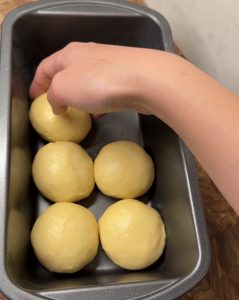
- Final proof: Cover and rise until doubled in size, about 2 hours. Use visual cues over the clock.
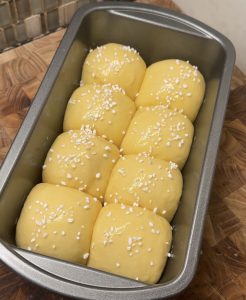
- Bake: Preheat oven to 350°F. Gently brush with egg wash and optionally sprinkle with pearl sugar. Bake for 20-25 minutes until deeply golden and internal temperature reaches 190°F. Remove from tin immediately and cool on a wire rack.