Brioche Cinnamon Rolls
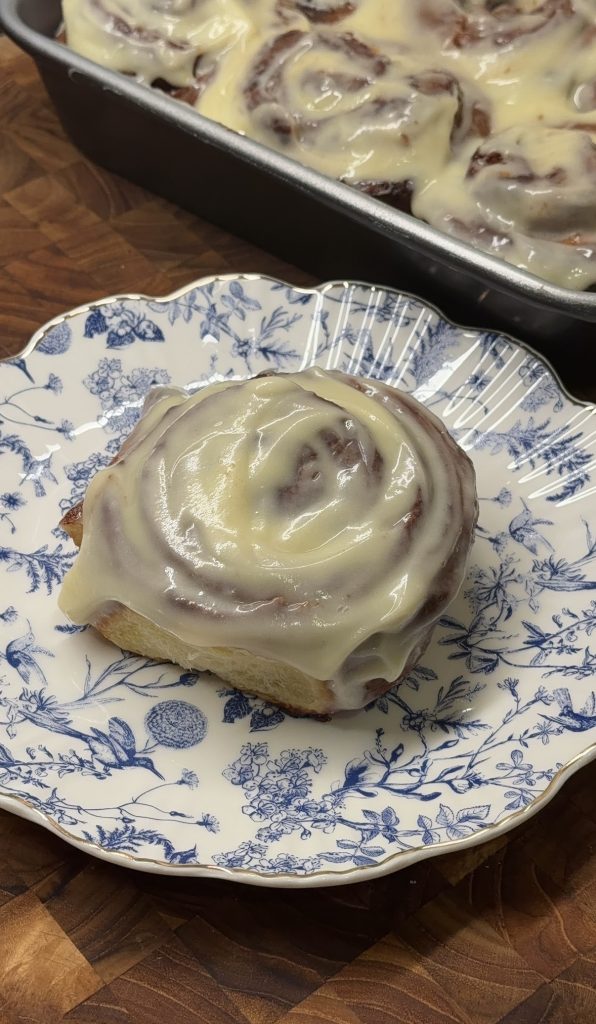
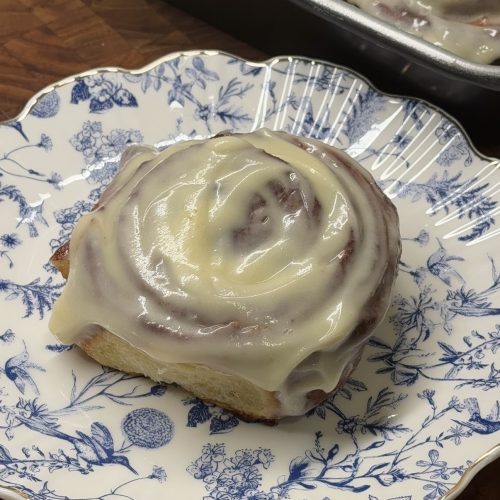
I’m sharing this as a separate post because when I made my Brioche Nanterre recently, I used the leftover dough to make cinnamon rolls on a whim, and they were genuinely the best cinnamon rolls I’ve ever had. I wanted to scale the dough measurements properly so it’s available here if you want to make the brioche recipe specifically for cinnamon rolls. Fair warning, this isn’t my most detailed recipe post with step by step photos since it was completely spur of the moment, but all the technique is the same as the Brioche Nanterre so that post has everything you need. I’m also planning a separate easier same-day cinnamon roll recipe down the road — but for now consider this your reference post for the scaled measurements and the full process!
Why You’ll Love This Recipe
- Brioche dough base — the high butter and egg content gives you a crumb that’s impossibly soft, rich, and pillowy in a way that standard doughs can’t replicate
- Dark brown sugar filling — deeper, more molasses-forward flavor than regular brown sugar with a caramelized gooey center in every roll
- Overnight cold ferment — dramatically improves the flavor and makes the dough significantly easier to work with
- That cream cheese frosting — tangy, buttery, and perfectly balanced against the sweetness of the filling
My Latest Videos
Brioche Cinnamon Rolls: Dough Makes All the Difference
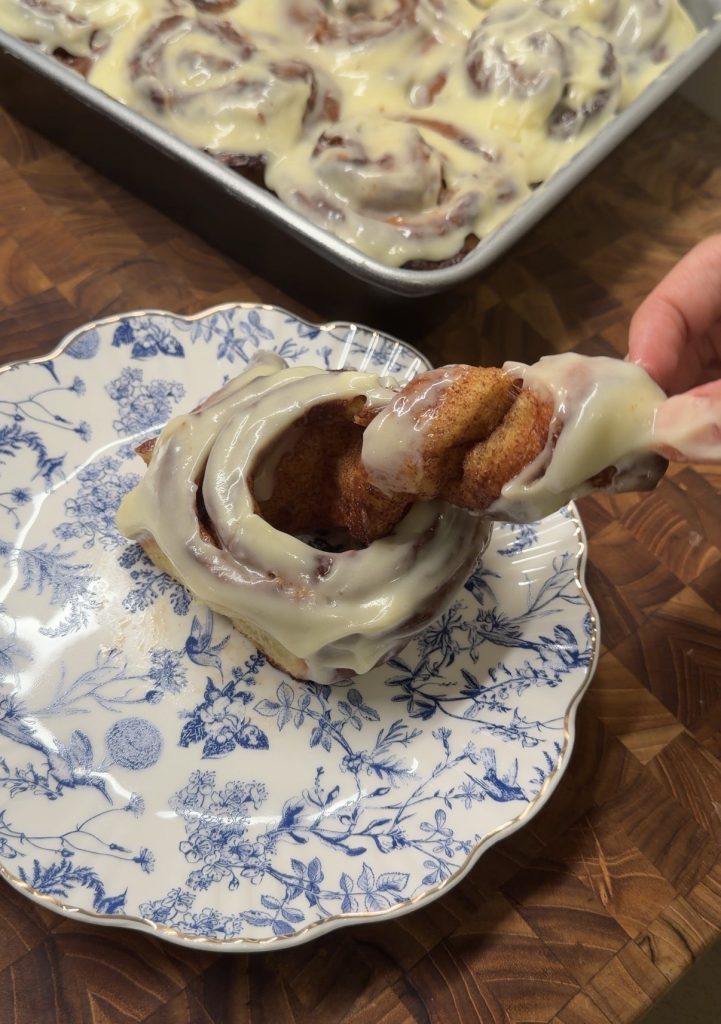
I’ve made a lot of cinnamon rolls. And the single biggest upgrade you can make to a cinnamon roll recipe has nothing to do with the filling or the frosting — it’s the dough. This recipe uses the same brioche dough from my Brioche Nanterre scaled to make 9 rolls, and the difference it makes is immediately obvious. The crumb is feathery and rich, the rolls stay soft for days, and the buttery flavor of the dough itself adds a whole extra dimension that you just don’t get from a basic enriched dough. If you’ve already made the Nanterre you already know how to make these — the dough process is identical.
Brioche Cinnamon Roll Ingredients
Brioche Dough
- 225 g bread flour
- 100 g Bagatelle T65 flour (replace entirely with bread flour or all-purpose flour if you do not have)
- 160 g whole eggs, cold (about 3 eggs)
- 32 g whole milk, cold
- 40 g sugar
- 7 g salt
- 3 g instant dry yeast
- 160 g unsalted butter, cut into small cubes and kept cold
Cinnamon Filling
- 57 g salted butter, softened (4 tbsp)
- 142 g dark brown sugar, packed (⅔ cup)
- 1½ tbsp ground cinnamon
Cream Cheese Frosting
- 112 g cream cheese, softened (4 oz)
- 75 g powdered sugar
- 3 tbsp salted butter, softened
- ½ tsp vanilla extract
The Brioche Dough
This is a high butter, high egg enriched dough that requires attention to temperature at every stage. It is the same technique as my Brioche Nanterre. Cold ingredients going in, dough temperature monitored throughout, butter added gradually in thirds after gluten has already developed, and an overnight cold ferment that you really cannot skip. The cold ferment does two things here — it develops a deeper, more complex flavor in the dough itself, and it firms up all that butter so the dough is significantly easier to roll out and fill without it sticking everywhere or losing its shape.
If this is your first time making brioche dough I’d recommend reading through the full Brioche Nanterre post first — it covers all the technical details about dough temperature, butter incorporation, and cold fermentation in depth.
The Dark Brown Sugar Filling
Dark brown sugar is non-negotiable here — the higher molasses content gives you a deeper, more complex caramel flavor that regular brown sugar just doesn’t have. Combined with cinnamon and softened salted butter it bakes into a gooey, jammy filling that soaks into every layer of the roll. Make sure your butter is fully softened so it spreads in an even thin layer all the way to the edges — uneven filling means uneven rolls.
The Cream Cheese Frosting
The frosting needs to be tangy enough to cut through the richness of the brioche and the sweetness of the filling — and this one nails it. Softened cream cheese, butter, powdered sugar, and vanilla come together into something that’s creamy, slightly tangy, and not overly sweet. Apply it while the rolls are still warm so it melts slightly into the swirls and gets into every crevice. That’s the move.
How To Make Brioche Cinnamon Rolls
- Chill everything: The night before or at least a few hours before mixing weigh all your dough ingredients and place them in the fridge — including eggs, milk, butter cubes, and your mixing bowl. Cold ingredients are essential for temperature control throughout this process.
- Initial mix: In the cold mixing bowl combine bread flour, T65 flour, sugar, salt, instant yeast, whole eggs, and cold milk. Mix on low speed with a dough hook until no dry flour spots remain then increase to medium speed and knead until the dough is cohesive and developing strength. You are building gluten before the butter goes in — this step matters.
- Check dough temperature: Before adding butter your dough temperature should be around 68°F. If it’s too warm stop the mixer, press plastic wrap directly against the surface of the dough, and place the entire mixing bowl in the fridge until it comes back down to 68°F.
- Add the butter: Lower the mixer speed slightly. Add the cold butter in thirds — a few small cubes at a time — waiting until each addition is fully incorporated before adding the next. Alternate between low and medium speed throughout. The dough temperature must not exceed 75°F during this process. Monitor it regularly.
- Check for doneness: Once all the butter is incorporated the dough should look extremely smooth and glossy. Do the windowpane test — stretch a small piece between your fingers and it should be thin, smooth, and translucent without tearing. Final dough temperature should not exceed 75°F.
- Bulk ferment: Shape the dough into a smooth ball, cover, and let bulk ferment at room temperature for 1 hour.
- Letter folds and cold ferment: Lightly flour your surface, gently degas the dough, and perform 2 rough letter folds to build a little more strength. Place in an airtight container, flatten slightly, and refrigerate for at least 12 hours and up to 24 hours.
MAKE THE FILLING AND SHAPE
- Make the cinnamon filling: In a bowl mix together softened salted butter, dark brown sugar, and cinnamon until fully combined into a smooth paste. Set aside.
- Roll out the dough: Remove the cold dough from the fridge. On a lightly floured surface roll the dough into a rectangle approximately 10×17 inches — the cold dough will be firm and easy to work with. Work quickly and keep the thickness even throughout.
- Fill: Spread the cinnamon filling in an even thin layer all the way to the edges of the dough. Make sure every corner is covered so you get filling in every bite of every roll.
- Roll and slice: Starting from the shorter edge, roll the dough tightly into a log. Use a sharp knife or unflavored dental floss to cut into 9 equal rolls of approximately 80g each. Place cut side up in a greased 9×13 inch baking dish with space between each roll.
- Final proof: Cover loosely and let rise at room temperature until the rolls look noticeably puffed and are touching each other, about 1.5 to 2 hours. Use visual cues over time.
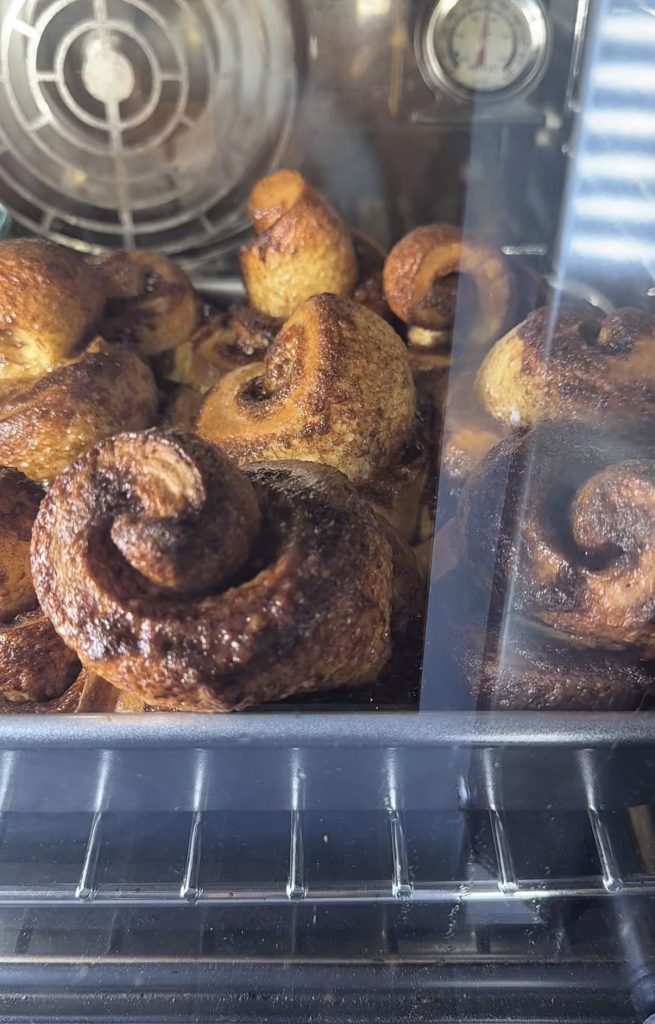
- Bake: Preheat oven to 350°F. Bake for 22-25 minutes until the tops are deep golden brown and the internal temperature reaches 190°F. Do not underbake — pale rolls will be doughy in the center.
MAKE THE FROSTING AND FINISH
- Make the cream cheese frosting: Beat softened cream cheese and softened butter together until smooth and fluffy. Add powdered sugar and vanilla extract and beat until combined and creamy. Taste and adjust sweetness if needed.
- Frost: While the rolls are still warm spread the cream cheese frosting generously over the top — the warmth of the rolls will help it melt slightly into every swirl. Serve immediately.
Tips for the Best Brioche Cinnamon Rolls
- Don’t skip the cold ferment — same day brioche cinnamon rolls are possible but the overnight cold ferment makes a significant difference in both flavor and workability. The dough is much easier to roll cold.
- Roll tightly — a loose roll means the layers separate during baking and the filling pools at the bottom instead of staying in the swirl. Apply gentle but consistent tension as you roll.
- Dental floss for clean cuts — slide unflavored dental floss under the log, cross the ends over the top, and pull in opposite directions for clean cuts that don’t compress the roll.
- Don’t overbake — pull them at 190°F internal temperature. Overbaked brioche cinnamon rolls dry out quickly and lose that pillowy softness that makes them special.
- Frost while warm — not hot, not cold. Warm rolls allow the frosting to melt just enough to seep into the swirls without completely dissolving.
Storage & Reheating
- Storage Store leftover rolls covered at room temperature for up to 2 days or in the fridge for up to 4 days. Brioche stays softer at room temperature than in the fridge but refrigerating extends the life significantly.
- Reheating
- Microwave (best method): Heat individual rolls for 20-30 seconds until warm and soft — they taste almost fresh baked
- Oven: Cover with foil and warm at 300°F for 8-10 minutes
- Make Ahead Tips
- Dough — the cold ferment IS the make ahead step. Make the dough the night before, shape and slice in the morning, proof and bake
- Shaped unproofed rolls — after slicing place rolls in the baking dish, cover tightly and refrigerate overnight. Pull out in the morning, let proof at room temperature for 2-3 hours then bake
- Frosting — make up to 3 days ahead and refrigerate. Bring to room temperature and stir before using
Brioche Cinnamon Rolls
Ingredients
Brioche Dough
- 225 g bread flour
- 100 g bagatelle t65 flour replace with all purpose flour or bread flour if you do not have
- 160 g whole eggs whisked, cold
- 32 g whole milk cold
- 40 g sugar
- 7 g salt
- 3 g instant dry yeast
- 160 g unsalted butter cut into small cubes, kept cold
Cinnamon Filling
- 57 g unsalted butter softened
- 142 g dark brown sugar
- 1 1/2 tbsp ground cinnamon
Cream Cheese Frosting
- 112 g cream cheese softened
- 75 g powdered sugar
- 3 tbsp salted butter softened
Instructions
Brioche Dough
- For more detailed steps for the brioche dough process, it can be found here
- Chill everything: Weigh all dough ingredients and refrigerate overnight or at least a few hours ahead — including eggs, milk, butter, and your mixing bowl.
- Initial mix: Combine bread flour, T65 flour, sugar, salt, yeast, eggs, and cold milk in the cold mixing bowl. Mix on low until no dry flour remains then increase to medium and knead until cohesive and developing strength.
- Check dough temp: Should be around 68°F before butter goes in. If too warm press plastic wrap on surface and refrigerate entire bowl until back to 68°F.
- Add butter: Lower speed slightly. Add cold butter in thirds, waiting for full incorporation before the next addition. Alternate low and medium speed. Temperature must not exceed 75°F.
- Windowpane test: Dough should be smooth and glossy with a thin translucent windowpane. Final temp should not exceed 75°F.
- Bulk ferment: Shape into a smooth ball, cover, and ferment at room temperature for 1 hour.
- Letter folds and cold ferment: Degas on a lightly floured surface and perform 2 rough letter folds. Place in an airtight container, flatten slightly, and refrigerate at least 12 hours and up to 24 hours.
Next Day
- Make the filling: Mix softened butter, dark brown sugar, and cinnamon into a smooth paste.
- Roll out: On a lightly floured surface roll cold dough into a 10×17 inch rectangle.
- Fill: Spread filling in an even thin layer all the way to the edges.
- Roll and slice: Roll tightly from the short edge into a log. Cut into 9 equal rolls using a sharp knife or dental floss. Place cut side up in a greased 9×13 inch baking dish.
- Final proof: Cover and rise until noticeably puffed and touching, about 1.5 to 2 hours.
- Bake: Preheat oven to 350°F. Bake for 22-25 minutes until deep golden brown and internal temperature reaches 190°F.
- Make frosting: Beat cream cheese and butter until smooth. Add powdered sugar and vanilla and beat until creamy.
- Frost: Spread frosting generously over warm rolls. Serve immediately.